Whole vs Ground Spices: Choose for the Way You Cook
Whole spices and ground spices can come from the same ingredient, but they behave differently in a dish. Ground spices are convenient for mixing throughout food; whole spices may be ground fresh or used for infusion. Neither form is automatically the better choice for every recipe.
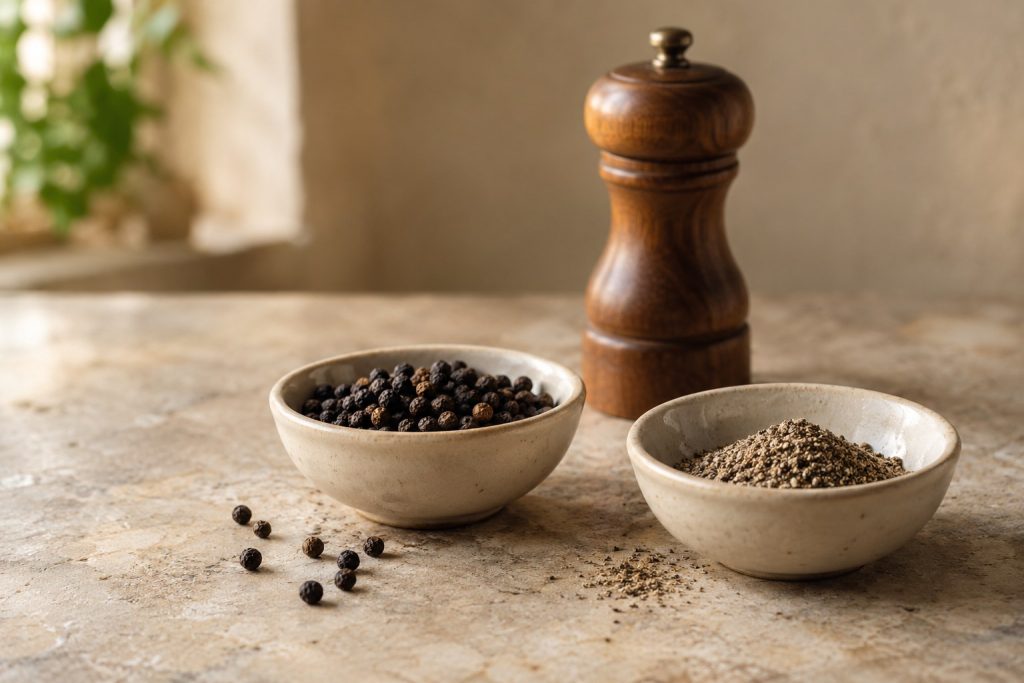
Follow the form named in the recipe
Whole peppercorns in a stockpot do a different job from ground pepper in a dressing. Check whether whole spices should remain, be removed or be ground. Do not assume a spoonful of whole spice has the same effect as a spoonful of powder.
Grind only when it helps
A suitable spice grinder or mortar lets you control texture. McCormick notes that grinding releases aromatic oils. Follow the tool’s instructions, keep it dry and avoid assuming a coffee grinder used for spices will remain neutral in flavor.
Buy amounts you will use
Whole spices often retain flavor longer than pre-ground versions, but storage conditions matter. A small jar used regularly may be a more practical purchase than a large container left open repeatedly. Choose for your cooking habits rather than treating freshness as a fixed countdown.
Keep steam out of the jar
Store spices tightly closed away from heat, light and moisture, following product guidance. Measure into a spoon away from a steaming pan before adding to food. Weak aroma can indicate lost flavor, but smell alone is not a safety test for a damp or contaminated product.
Sources
Related reading
Fresh vs Dried Herbs: Why the Spoonful Is Different
Teaspoon vs Tablespoon: Avoid a Recipe Mix-Up
Related reading
Fresh Ginger vs Ground Ginger: More Than a Texture Swap
Related reading
Is Allspice the Same as Mixed Spice? Check the Ingredient List
Related reading
Cumin vs Caraway: Similar-Looking Seeds, Different Seasoning
Related reading
About this article: an introductory editorial draft. Not yet independently reviewed by a fitness professional.