Fresh Ginger vs Ground Ginger: More Than a Texture Swap
Fresh ginger and ground ginger come from the same plant but are not identical ingredients in cooking. Fresh ginger provides moisture and a fibrous texture; the dried powder is easy to distribute through a mixture. A substitution can change flavor as well as texture.
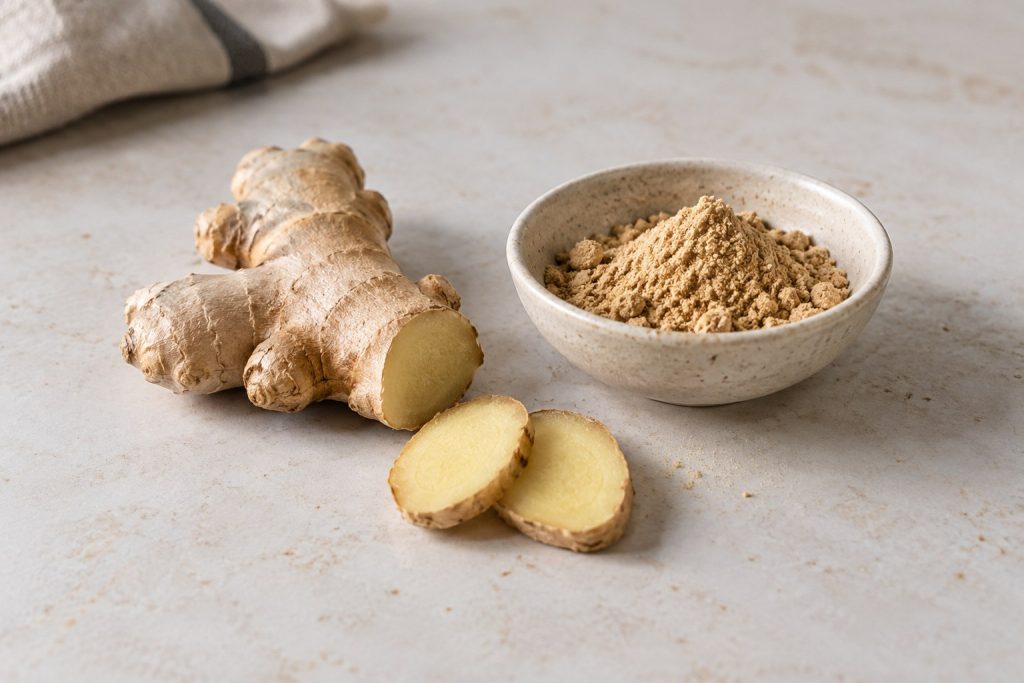
Look at ginger’s role in the dish
Sliced ginger in a broth, grated ginger in a sauce and ground ginger in a cake perform different jobs. Check whether the ginger remains in the finished dish or is removed. Powder cannot reproduce slices that you plan to take out later.
Avoid an automatic equal-volume swap
McCormick provides a product-specific conversion between ground and grated fresh ginger, showing that equal spoonfuls are not the default. Use the recipe’s guidance or the product’s substitution advice. A conversion is a starting point for flavor, not proof that every dish will stay identical.
Distinguish paste and sweetened products
A ginger paste may include other ingredients, while crystallized ginger includes sugar. Neither is simply another package of plain ground ginger. Read the ingredients and consider the added liquid or sweetness before substituting.
Keep the forms in suitable storage
Follow the storage instructions for the product you bought. Keep ground ginger sealed and dry, and handle fresh ginger with clean utensils. Choose the form you will actually use; this cooking comparison does not establish a therapeutic dose or a health benefit.
Sources
Related reading
Whole vs Ground Spices: Choose for the Way You Cook
Pumpkin Purée vs Pumpkin Pie Mix: Check Before You Bake
Related reading
Curry Powder vs Garam Masala: Different Blends, Different Results
About this article: an introductory editorial draft. Not yet independently reviewed by a fitness professional.