Curry Powder vs Garam Masala: Different Blends, Different Results
Curry powder and garam masala are spice blends, not two names for an identical ingredient. Their formulas vary by maker and recipe. Use the named blend when you want to follow a dish’s intended flavor closely.
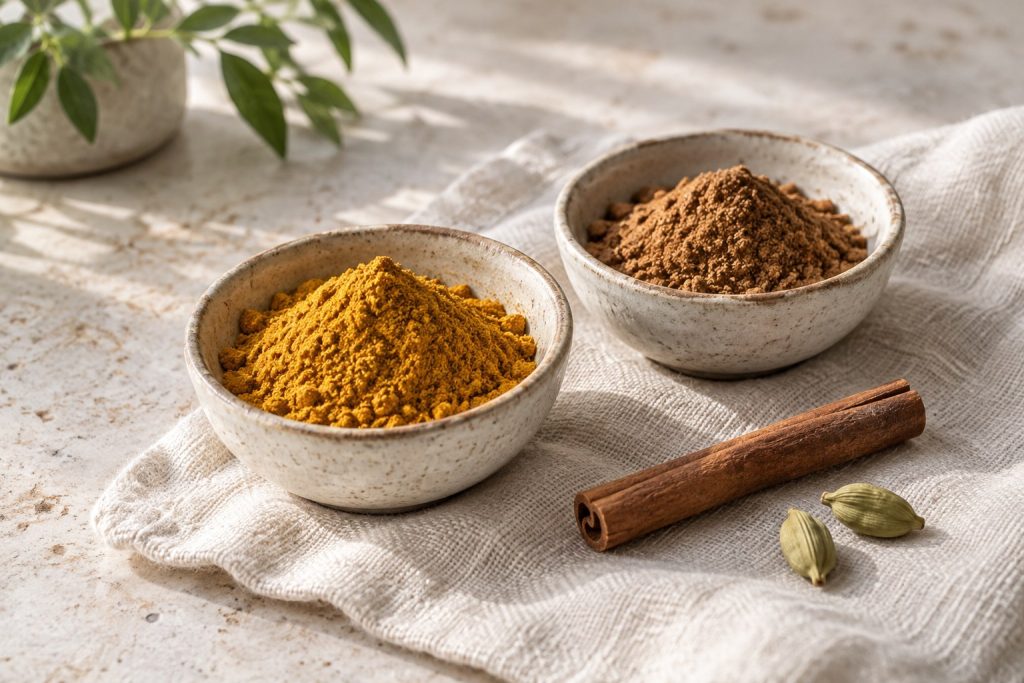
Compare actual ingredient lists
McCormick’s cited curry powder lists turmeric and fenugreek among its spices. Its garam masala description highlights coriander, black pepper, cumin, cardamom and cinnamon. These are examples, not universal definitions of every regional or family blend.
Notice when the blend is added
The cited garam masala product suggests adding it near the end of cooking for aroma. Follow your recipe’s sequence: sprinkling a blend over a finished dish and cooking it earlier with other ingredients are different uses.
Expect a different result if substituting
A straight swap can change aroma, color and the balance of spices. If improvising a simple vegetable dish, begin with a modest amount and taste the finished, safely cooked food. Do not expect a substitution to reproduce the original recipe exactly.
Keep powder separate from paste
A curry paste is another product, potentially containing liquid, salt and additional ingredients. It is not automatically equivalent to dry curry powder. Check the package and recipe instead of applying the same spoonful measurement across all three products.
Sources
Related reading
About this article: an introductory editorial draft. Not yet independently reviewed by a fitness professional.