Black vs White Pepper: More Than a Color Choice
Black and white pepper come from the pepper plant, Piper nigrum. White pepper has its outer fruit layer removed during processing. It is not simply black pepper colored white, and the flavor difference matters as well as appearance.
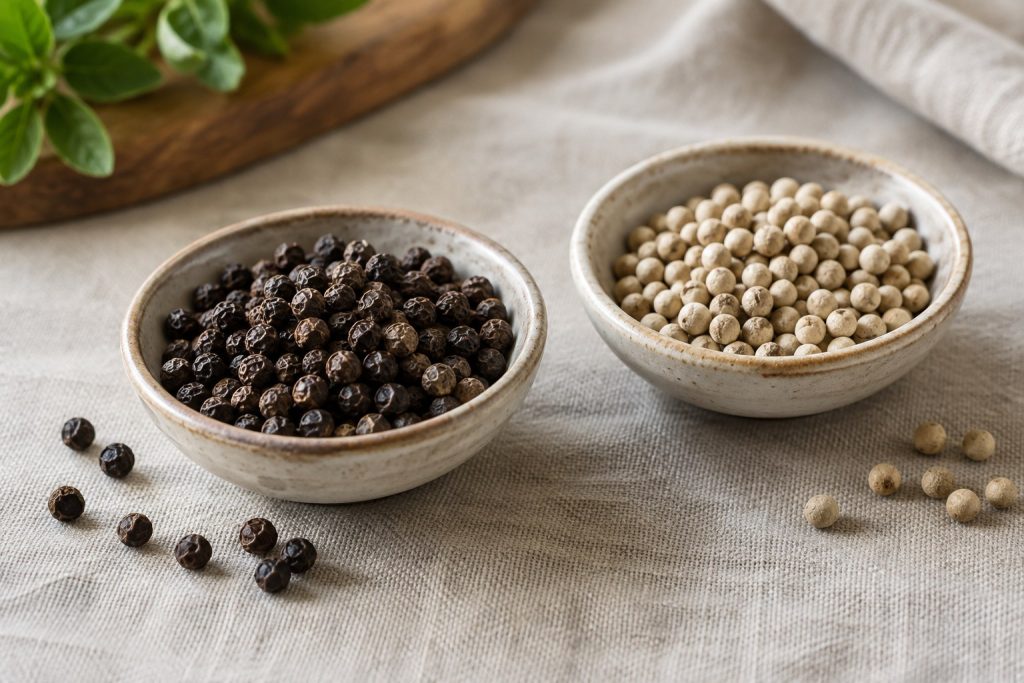
Consider the dish’s appearance
Ground white pepper can season a pale sauce without the conspicuous dark flecks of black pepper. That is a culinary appearance choice, not evidence that the sauce becomes healthier. Use the seasoning your recipe calls for when reproducing its flavor.
Do not assume white means mild
White pepper still has a pungent pepper flavor. Descriptions of relative heat vary across products and preparations, so color alone is a poor dosing rule. Start with the recipe’s amount and taste the finished edible mixture before adding more.
Compare equivalent forms
Whole peppercorns and finely ground pepper do not measure or distribute identically. Check whether the recipe expects grinding, infusing or direct mixing. Replacing whole peppercorns with the same volume of powder can change the result substantially.
Read blended seasonings separately
A jar may contain pure pepper or a mix with salt and other spices. Check the ingredient list before substituting. This comparison concerns black and white peppercorn products, not chili peppers or every seasoning sold with pepper in its name.
Sources
McCormick Science Institute; McCormick.
Related reading
About this article: an introductory editorial draft. Not yet independently reviewed by a fitness professional.