Fresh vs Dried Herbs: Why the Spoonful Is Different
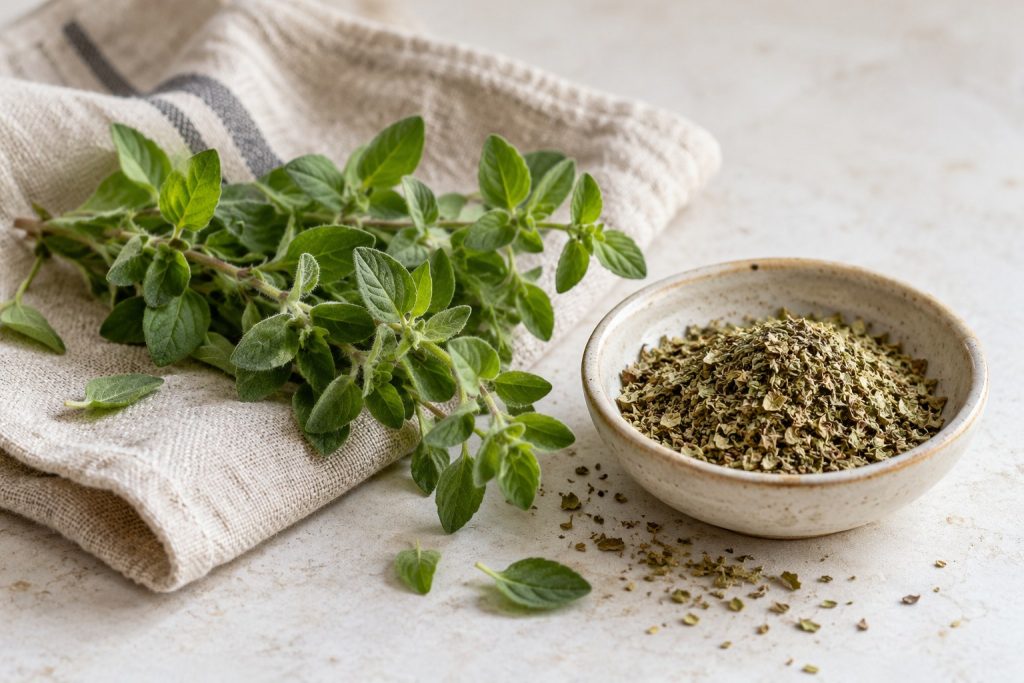
Fresh and dried herbs are not usually substituted spoon for spoon. A common starting guide uses less dried herb because drying changes its concentration and texture. The right amount still depends on the herb, product and dish, so treat a conversion as a starting point rather than a guarantee.
Start with a practical conversion
McCormick gives a guide of 3 parts fresh herb to 1 part dried, such as 3 teaspoons fresh oregano for 1 teaspoon dried. This compares volume, not equal weights. Follow a recipe’s specific advice when it provides a different tested substitution.
Identify the product form
Plain dried leaves, ground herbs, herb pastes and lightly dried refrigerated products are not identical. A seasoned blend may also contain salt or oil. Read the product’s own instructions rather than applying the same ratio to every package with an herb name.
Consider the job in the dish
A small dried addition may fit a cooked sauce but will not recreate the leafy texture of a fresh garnish or herb-heavy salad. Choose the form for flavor and texture together. Where tasting is appropriate, begin conservatively and adjust after the flavor has dispersed.
Keep storage and freshness in view
Follow the label’s storage directions, particularly for refrigerated pastes or lightly dried herbs. Keep containers identified so you know whether you are using a blend or a single herb. Compare the finished flavor rather than assuming a larger spoonful always fixes a stale product.
Sources
Related reading
Teaspoon vs Tablespoon: Avoid a Recipe Mix-Up
Light vs Dark Soy Sauce: Light Does Not Mean Low Sodium
Related reading
Whole vs Ground Spices: Choose for the Way You Cook
Related reading
Leeks vs Scallions: Similar Colors, Different Recipe Roles
Related reading
Cilantro and Coriander: Which Part Does the Recipe Mean?
Related reading
Flat-Leaf vs Curly Parsley: Both Belong in the Kitchen
Related reading
Sweet Basil vs Thai Basil: Which One Fits Your Recipe?
Related reading
Dill Weed vs Dill Seed: Which One Is in Your Recipe?
Related reading
About this article: an introductory editorial draft. Not yet independently reviewed by a fitness professional.