Cilantro and Coriander: Which Part Does the Recipe Mean?
Cilantro leaves and coriander seeds come from the same plant but have different kitchen roles. In US recipes, cilantro usually means the leafy herb and coriander often means the seed. Read the form, not just the shared plant name.
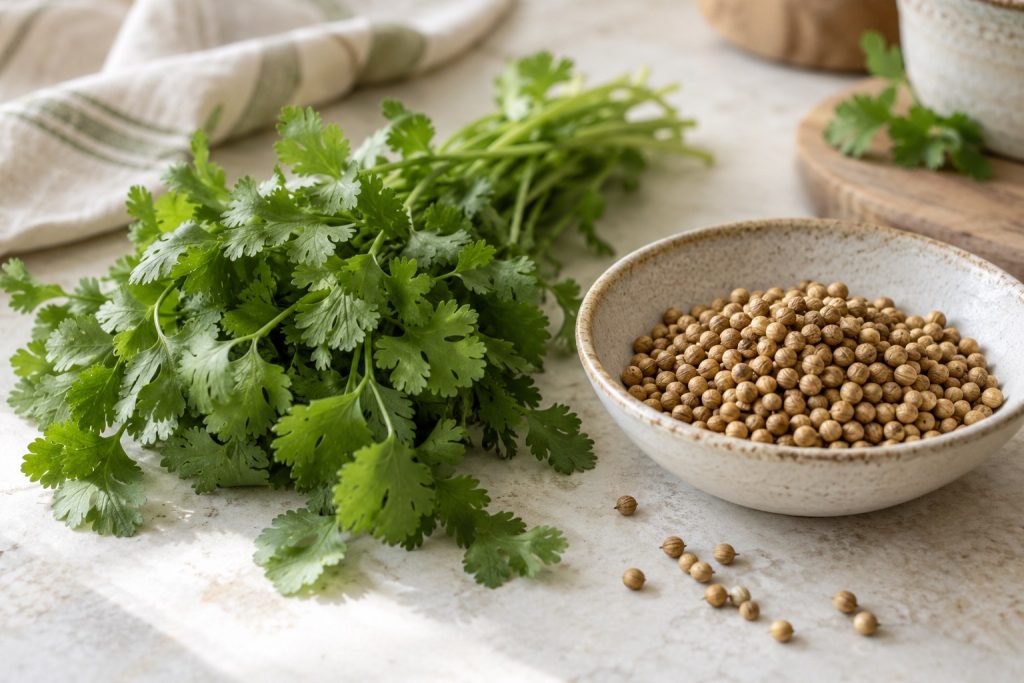
Check for leaves, seeds or ground spice
The McCormick Science Institute distinguishes the leaves from the seeds and notes their different flavors and uses. Fresh coriander can mean the leaves in recipes from other countries. The words chopped, whole and ground help clarify what is intended.
Match the point of use
A leafy garnish and a ground spice stirred into a dish are not equivalent additions. Look at the preparation and timing in the recipe. A handful of chopped leaves cannot be translated directly into the same volume of ground seeds.
Keep dried leaves separate too
Dried cilantro leaves are still leaves, not ground coriander seed. Read the complete jar label before measuring. A dried herb substitution is a different question from exchanging one part of the plant for another.
Choose a deliberate alternative
If you dislike or cannot find the requested ingredient, use a substitution suggested for that particular dish. Shared origin does not guarantee the same flavor. Avoid changing the entire recipe’s seasoning based only on the word coriander.
Sources
McCormick Science Institute — Coriander.
Related reading
Fresh vs Dried Herbs: Why the Spoonful Is Different
Whole vs Ground Spices: Choose for the Way You Cook
Related reading
About this article: an introductory editorial draft. Not yet independently reviewed by a fitness professional.