Cumin vs Caraway: Similar-Looking Seeds, Different Seasoning
Cumin and caraway are different spices. Their similar-looking seeds do not make them interchangeable. Check the ingredient name and whether the recipe needs whole or ground spice before adding a spoonful.
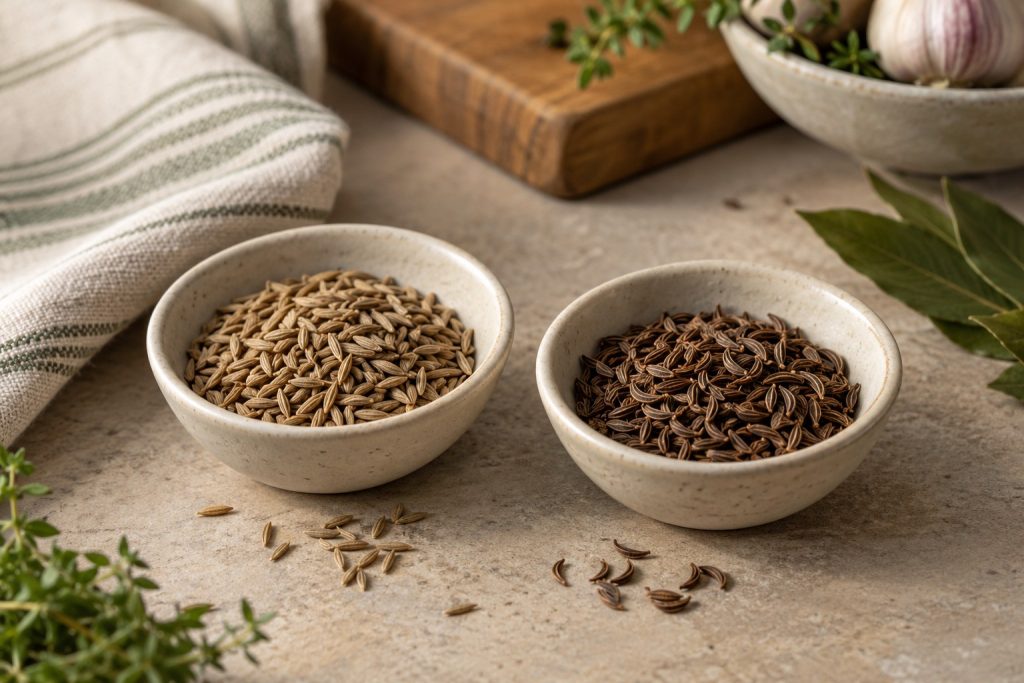
Compare the intended flavor
McCormick describes cumin as warm and earthy, while its caraway has a licorice note. Caraway is familiar in rye bread and cabbage dishes; cumin appears in dishes such as chili and lentil soup. These are examples, not limits on their use.
Do not identify by color alone
Both can look brownish in a spice jar. Keep the label with the product rather than relying on memory after decanting. A similar photograph or a familiar-looking seed is not a reliable replacement for the ingredient name.
Match whole and ground forms
Ground cumin disperses differently from intact seeds. Follow the form specified in the recipe and any instruction to toast or grind. Replacing a whole spice with a ground one changes more than the appearance.
Treat a swap as a flavor change
For a flexible soup, you may choose a different seasoning deliberately. Do not expect caraway to reproduce cumin’s flavor in an unchanged recipe. Start with a recipe using the spice you have when the seasoning is central to the dish.
Sources
McCormick — Ground cumin; McCormick — Whole caraway seed.
Related reading
Whole vs Ground Spices: Choose for the Way You Cook
Curry Powder vs Garam Masala: Different Blends, Different Results
About this article: an introductory editorial draft. Not yet independently reviewed by a fitness professional.