Tuna in Water vs. Oil: Compare the Fish and the Portion
Tuna packed in water and tuna packed in oil can differ in energy, texture, and ingredients. To compare them fairly, first match the type of tuna and the portion described on the label. The packing liquid alone does not determine the full nutritional profile or how often a particular fish suits your diet.
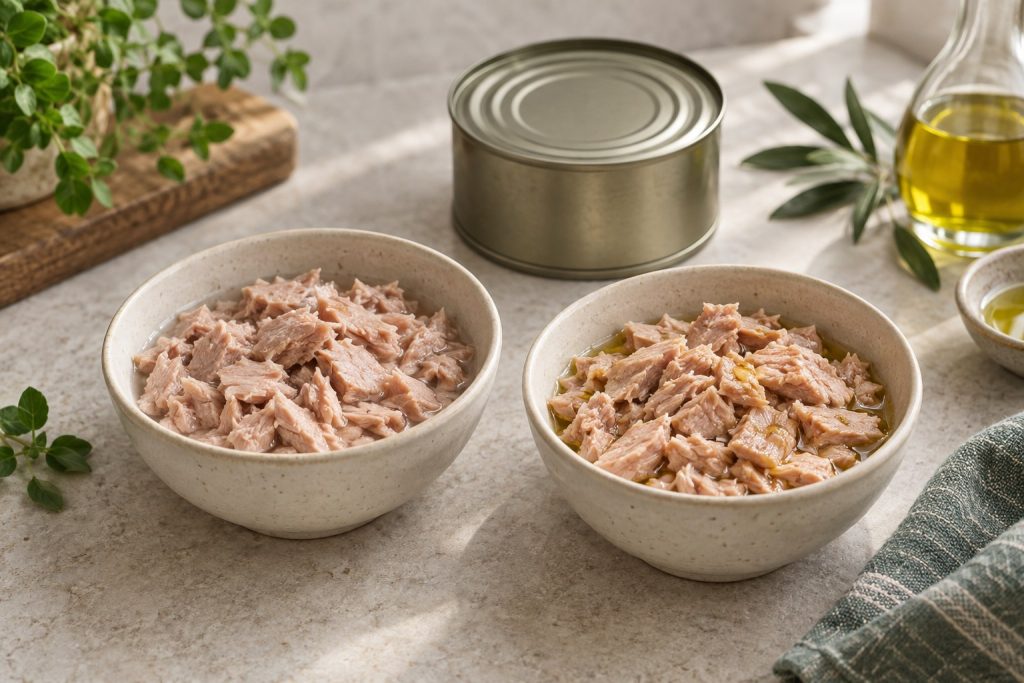
Why start with the type of tuna?
Light tuna and white albacore are not identical products. If you change both the fish type and the packing liquid, you cannot attribute every difference to oil. Manufacturer labels, including Bumble Bee’s, identify the fish and ingredients. Compare similar products when you want to isolate the effect of the packing medium.
Does the label refer to drained fish?
Read the serving description carefully. It may refer to a drained can or another specified amount. Use that same basis when comparing products. Draining oil does not guarantee the fish becomes nutritionally identical to water-packed tuna. If you keep the liquid in a recipe, account for what actually goes into the dish.
What else should you compare?
Look at protein, energy, fat, salt or sodium, and the ingredient list. A water-packed product may still contain broth or added salt. An oil-packed version may use different oils. Include dressings and other ingredients in the final meal; changing the can while ignoring additions can give an incomplete picture.
Does oil or water change fish-consumption advice?
The packing liquid is not a shortcut around guidance about mercury and fish types. FDA and EPA provide specific advice for pregnancy, breastfeeding, and children; consult that guidance when it applies. Choose variety rather than treating one canned product as a mandatory daily food, and follow the package’s storage instructions after opening.
Sources
Bumble Bee — tuna labels; FDA and EPA — fish advice.
Related reading
Protein Foods: Compare the Portions You Actually Eat
How to Use the Tare Button on a Kitchen Scale
Related reading
About this article: an introductory editorial draft. Not yet independently reviewed by a fitness professional.