Canned Salmon vs Tuna: Read Beyond the Front Label
Canned salmon and tuna both offer convenient protein, but fish species, packing liquid and product preparation change the comparison. Choose using the actual label and intended meal rather than assuming all canned fish has the same composition.
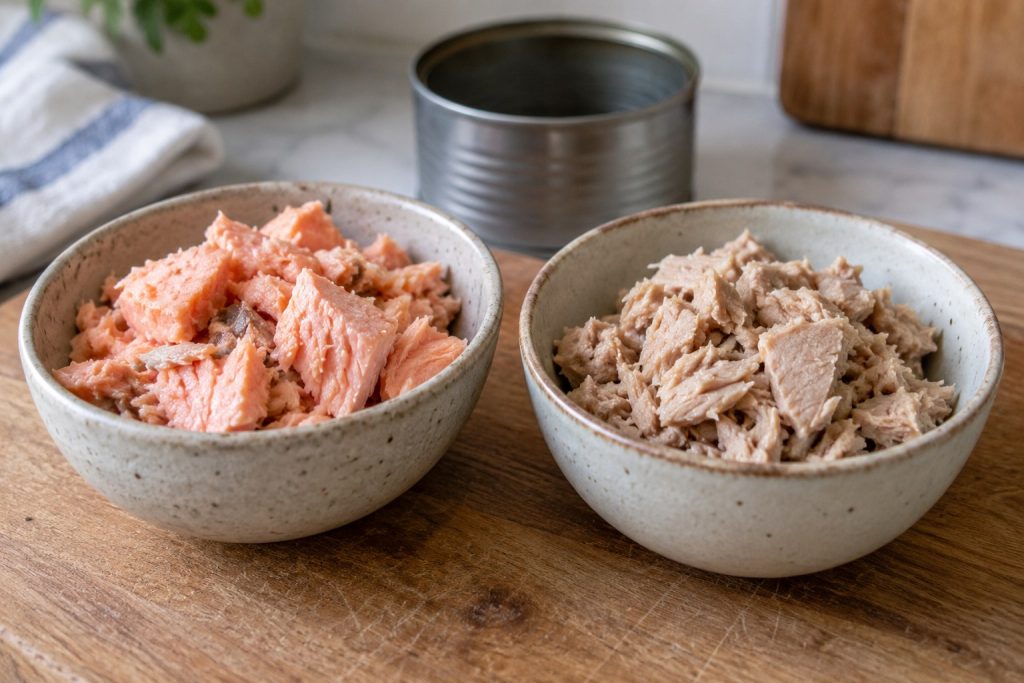
Identify the fish
Tuna is not a single mercury category. FDA/EPA guidance places salmon and canned light tuna among Best Choices, while albacore or white tuna is a Good Choice with different frequency advice. Pregnancy, breastfeeding and children require attention to the full serving guidance, not just a category name.
Compare equivalent portions
Match drained portions when the nutrition panels use drained fish. Compare protein, sodium and fat on that same basis. Water-packed and oil-packed versions are not interchangeable, and draining does not give a precise, universal reduction in calories or sodium.
Check skin and bones
Some canned salmon includes skin and soft edible bones; others are explicitly boneless. The choice changes texture and can affect calcium content. Read the product label rather than assuming every salmon can has bones or that all canned fish bones should be eaten.
Plan how you will use it
Try flakes in a sandwich, grain bowl or cooked dish that suits the flavor and texture. Follow storage directions after opening and refrigerate promptly. Fish allergy still applies to canned fish. Use official local advice for personal limits rather than treating this comparison as an individualized eating plan.
Sources
FDA / EPA; Chicken of the Sea.
Related reading
Tuna in Water vs. Oil: Compare the Fish and the Portion
Protein Foods: Compare the Portions You Actually Eat
Related reading
Do You Need to Remove the Skin and Soft Bones from Canned Salmon?
About this article: an introductory editorial draft. Not yet independently reviewed by a fitness professional.