Protein Foods: Compare the Portions You Actually Eat
Compare protein foods using the amount you actually plan to eat, not just a large number on the package. Food weight and protein content are different: a 100-gram serving of food is not 100 grams of protein. Check the serving basis, preparation state, and label before adding amounts to a daily total.
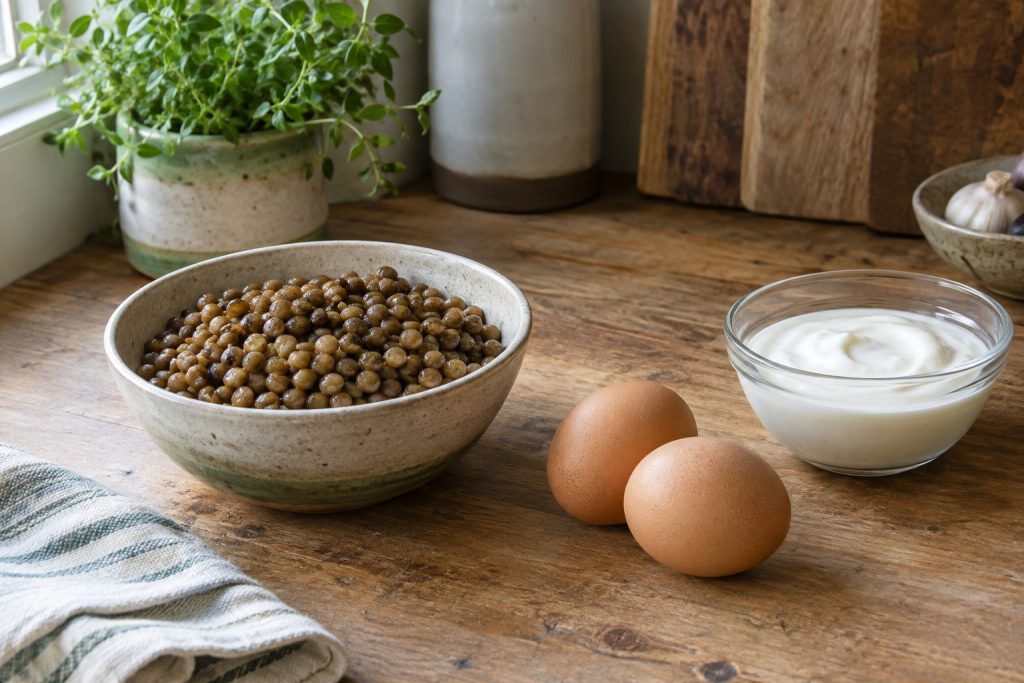
Which everyday foods can provide protein?
Options include eggs, fish, poultry, meat, dairy foods, beans, lentils, tofu, and other soy foods, with different amounts in different portions. Nuts, seeds, and grain products can contribute too. The FDA’s protein resource describes protein sources and the nutrient’s role.
The most useful choice is not necessarily the food with the highest value per 100 grams. Consider what you enjoy, can afford, and can prepare consistently, alongside your overall eating pattern.
How do you calculate protein in your portion?
Divide your portion by the label’s serving amount, then multiply by protein per serving. Use the same units and match the food’s preparation state.
| Illustrative label and portion | Calculation |
|---|---|
| 8 g protein per 100 g; you eat 150 g | 150 ÷ 100 × 8 = 12 g protein |
| 12 g per serving; you eat half | 0.5 × 12 = 6 g protein |
These are invented label examples, not nutrient values assigned to the foods in the cover image. The FDA explains serving-size information and why the amount eaten changes the nutrient total.
Why do raw and cooked weights matter?
Cooking can change water content and therefore the weight of a portion. A cooked-food entry should not be applied blindly to a raw weight, or vice versa. For packaged foods, follow the stated basis such as prepared, dry, or drained.
What else belongs in the comparison?
Consider the rest of the meal, cost per usable portion, storage, and preparation time. Foods provide more than a single nutrient. Our plant and animal protein guide discusses broader differences.
How does this connect to daily needs?
Start with a suitable daily range, then check how ordinary meals contribute. Avoid treating every meal as a contest to maximize one number. Read daily protein for muscle building and reading protein labels for context.
Related reading
Canned vs. Dried Beans: Compare Convenience, Sodium, and Cost
Related reading
Tuna in Water vs. Oil: Compare the Fish and the Portion
Related reading
About this article: an introductory editorial draft. Not yet independently reviewed by a fitness professional.