Plant Protein vs. Animal Protein for Building Muscle
Both plant and animal protein can contribute to a muscle-building diet. The useful comparison depends on the specific food, how much protein you eat, and your training. “Plant protein” is a broad category: results for soy supplements cannot automatically be applied to every plant food or product.
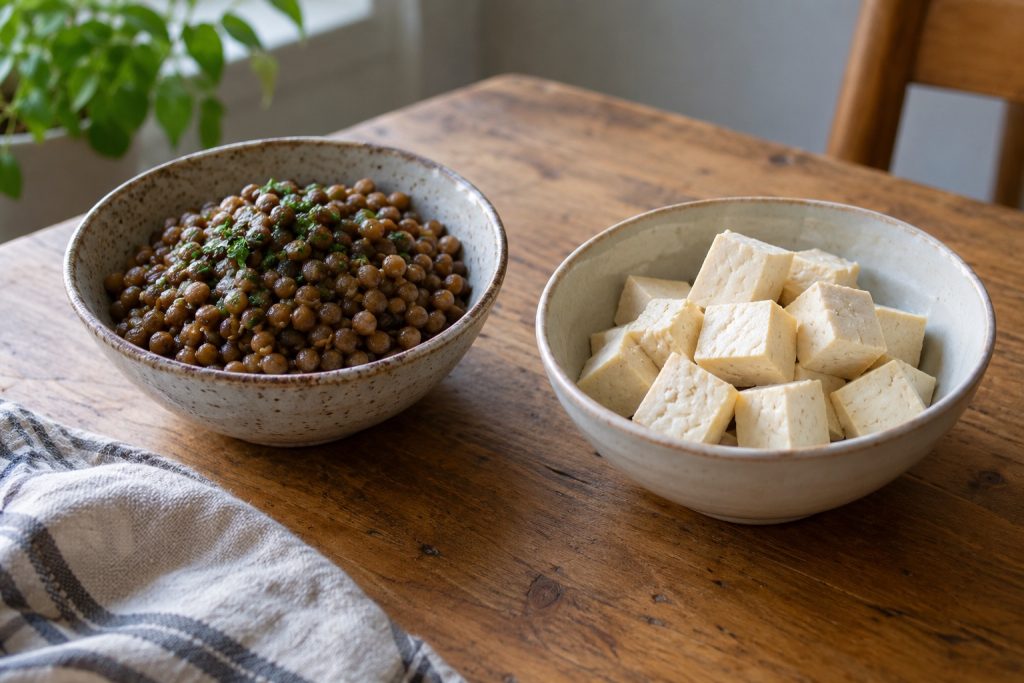
What does the research show?
A 2025 meta-analysis of randomized trials found a small overall advantage for animal protein on muscle mass, but no significant pooled difference between soy and milk protein on that outcome. It found no significant overall difference for strength. The authors called for research on a wider range of plant sources and diets.
These findings do not mean that plant-based eaters cannot build muscle or that all products are identical. They also distinguish muscle size from strength: a result on one outcome is not automatically a result on the other.
How should you compare foods in practice?
Compare portions you would actually eat. A bowl of beans, a serving of tofu, eggs, and a scoop of powder are different foods with different serving sizes. Their protein numbers should come from their own labels or a suitable food-composition entry, not a universal chart for “one portion.”
| Question | Useful check |
|---|---|
| How much protein is in my portion? | Multiply the labeled amount by the number of servings eaten. |
| Will I use it regularly? | Consider taste, price, cooking time, and availability. |
| What else is in the meal? | Review the whole meal instead of its protein number alone. |
| Does it suit my needs? | Check allergies, dietary preferences, and relevant medical advice. |
What might a plant-focused meal look like?
As an ordinary meal idea, combine tofu with rice and vegetables, or use lentils in a substantial soup with bread. These examples are not nutritionally equivalent portions or personalized meal plans. Adjust the ingredients and quantities to your appetite and overall intake.
If you replace a familiar animal food, check what the replacement actually contributes. A plant-based beverage, for example, is not automatically a protein-equivalent substitute merely because it occupies the same place in a recipe.
Do you need a protein supplement?
First review a typical day’s meals. A powder can be convenient, but its usefulness depends on what is missing or difficult in that routine. Replacing a meal you enjoy with a supplement solely because of an online ranking may create extra cost without solving a real problem.
Start with daily protein for muscle building and whether you need protein powder. If you are making a major dietary change, a qualified dietitian can help assess the whole diet, including nutrients beyond protein.
What should you track alongside food?
Keep a consistent training progression and comparable records. Changing food sources, training frequency, and exercise selection together makes it difficult to identify why results changed. Judge the combination over time rather than expecting one ingredient to determine the outcome.
Plan the rest of the meal
See our guide to fresh versus frozen vegetables for practical examples and the limits of the general guidance.
About this article: an introductory editorial draft. Not yet independently reviewed by a fitness professional.