How to Use the Tare Button on a Kitchen Scale
The tare or zero button subtracts the weight currently on a kitchen scale from the displayed reading. That lets you weigh food without counting the bowl, or add ingredients one at a time. It changes the reference point on the display; it does not remove the physical load from the scale.
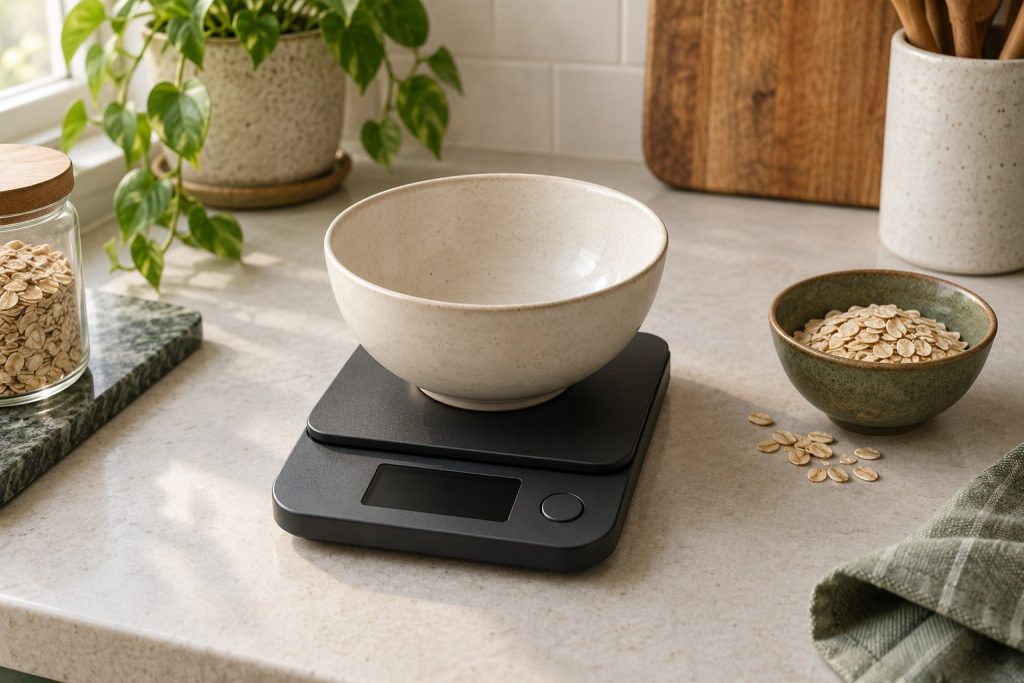
How do you weigh food without the bowl?
Put the scale on a firm, level surface and select the unit your recipe uses. Place the empty bowl on the platform, wait for a stable reading, and press tare. After the display returns to zero, add the food. OXO’s instructions illustrate this sequence. Keep the bowl clear of nearby objects that could support part of its weight.
How do you add several ingredients?
For an illustrative example, add 40 g of oats, note the amount, then press tare again. Add 100 g of yogurt. The display now shows the yogurt added since the last reset, while the bowl contains 140 g of food. These are example recipe amounts, not prescribed portions. Record each ingredient before resetting if you need a total.
Why does the display sometimes go negative?
Removing a bowl or ingredient after taring can produce a negative reading because the scale still uses the earlier load as its zero point. Reset with the intended container in place before starting again. Also check the unit: ounces and grams are different, and a liquid-volume mode is not a universal converter for every ingredient.
What does tare not solve?
Taring does not increase the maximum capacity or improve the scale’s resolution. The bowl still counts toward the physical load limit. Check batteries, stability, and the manual if readings drift. For food comparisons, match the state named on the label—such as dry or drained—and remember that measuring a recipe does not require tracking every meal.
Sources
Related reading
Should You Weigh Food Raw or Cooked? Match the Food to the Entry
Rolled Oats vs. Steel-Cut Oats: Texture, Time, and Portions
Related reading
Serving Size vs Portion Size: How to Read the Numbers
Related reading
Dry vs Liquid Measuring Cups: Use the Right Tool
Related reading
Grams vs Milliliters on a Kitchen Scale
Related reading
Where Should You Store Olive Oil After Opening?
Related reading
Chocolate Chips vs Chopped Chocolate: Why Cookies Change
Related reading
Does Egg Size Matter in Baking? Read the Recipe’s Weight
Related reading
About this article: an introductory editorial draft. Not yet independently reviewed by a fitness professional.