Serving Size vs Portion Size: How to Read the Numbers
A serving size on a nutrition label is the basis for the printed numbers. Your portion is the amount you choose to eat. They can match, but they do not have to. On US labels, serving sizes reflect amounts typically consumed, not a personal recommendation.
Does a serving tell you how much to eat?
No. A label serving is a reference for interpreting nutrition information, not an individualized meal plan. Your portion can differ with appetite, the rest of the meal, and other needs. Check the number of servings in the package too: the nutrition panel may not describe the entire bag, jar, or bottle.
How do you scale the label to your portion?
Suppose a fictional label lists 150 calories per 40 g, and you eat 60 g. Your portion is half as much again as the listed serving, so it supplies 225 calories. Apply the same proportion to the other listed nutrients. These numbers illustrate arithmetic; they do not recommend a food, portion, or calorie target.
What if the label uses a different basis?
Some labels show values per 100 g alongside or instead of per serving. Choose the relevant column and use it once; do not apply both adjustments. Check whether the stated weight refers to food as sold, drained, dry, or prepared. Water added during cooking changes weight, which can make a comparison misleading if the bases differ.
Do you need to weigh everything?
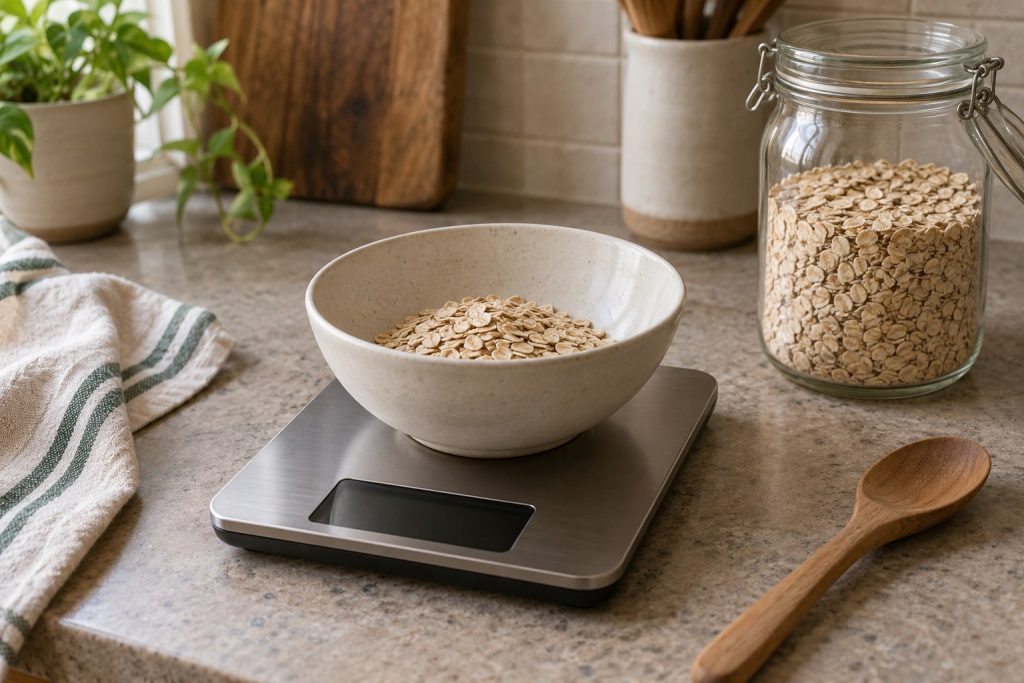
No. A kitchen scale can clarify an unfamiliar label or recipe, but constant weighing is not required for ordinary meals. If you do weigh a portion, place the empty container on the scale and tare it before adding food. Use the result as information, not as a rule that overrides hunger or the wider meal.
Sources
U.S. Food and Drug Administration.
Related reading
How to Use the Tare Button on a Kitchen Scale
Should You Weigh Food Raw or Cooked? Match the Food to the Entry
Related reading
Total Sugars vs Added Sugars: Reading a US Nutrition Label
Related reading
How to Compare Frozen Meals Beyond the Front of the Box
Related reading
Air-Popped vs Microwave Popcorn: What Actually Changes?
Practice portion calculations with the five worked label examples.
About this article: an introductory editorial draft. Not yet independently reviewed by a fitness professional.