Should You Weigh Food Raw or Cooked? Match the Food to the Entry
If you choose to track food, match the state you weigh to the label or database entry: dry with dry, raw with raw, and cooked with cooked. Neither weighing method is universally best. The common mistake is using a cooked weight with nutrition information for the uncooked food.
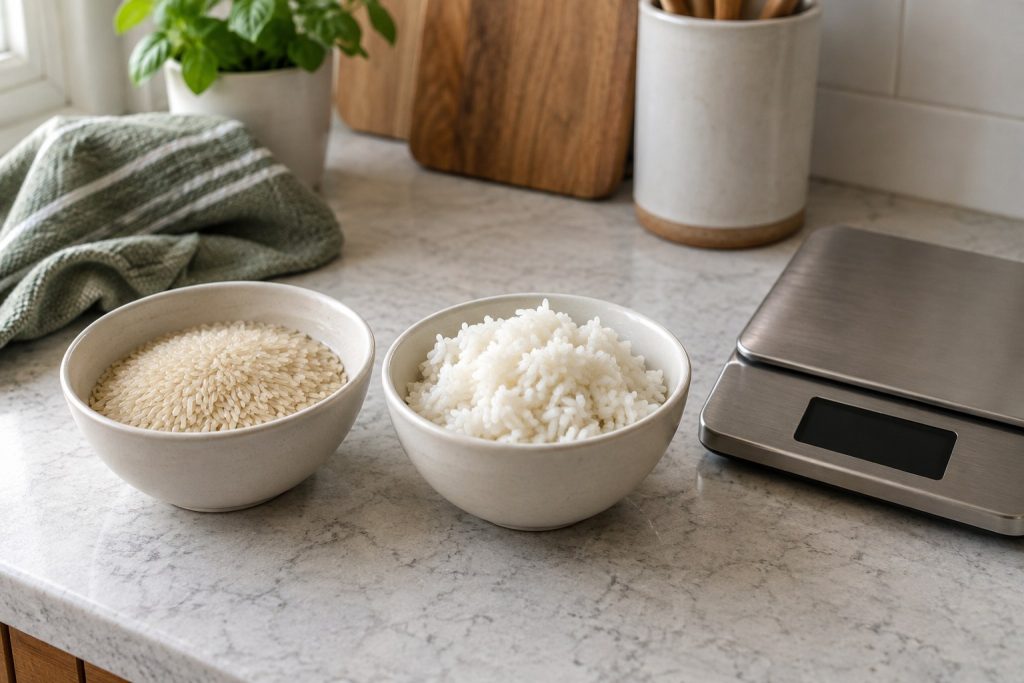
Why does cooking change the weight?
Rice and pasta take up water, while foods such as roasted meat can lose moisture. USDA explains moisture loss during meat cooking. A change in weight therefore does not directly tell you the change in calories or protein. Added oil, sauces, and discarded cooking liquid create further differences.
Do not assume there is one conversion factor for every rice variety, cooking method, or food. A cooked portion is not interchangeable gram for gram with the same food before cooking.
What does the label describe?
Read the serving wording and preparation notes. Check whether values describe the food as sold, drained, or prepared, and whether an additional column includes milk or other ingredients. A database entry should also match the cooking method and edible portion.
For US labels, the FDA explains that serving size is a reference amount, not a recommendation for how much to eat. Other countries use different label formats. Our nutrition-label guide shows why the amount and the nutrient number must be read together.
How do you divide a cooked batch?
Here is a fictional allocation example for plain rice. Suppose 300 g dry becomes 900 g cooked, and you serve 150 g. Your portion is 150 ÷ 900 = one sixth of the batch. For a recipe entry based on the dry ingredient, allocate one sixth of 300 g: 50 g dry-equivalent.
The factor of 3 is specific to this example. Weigh your own finished batch if using this method. Include other recipe ingredients and divide them consistently; do not add the same portion again as a separate cooked-food entry. This is a tracking estimate, not a laboratory measurement of nutrients retained.
What is the simplest consistent approach?
Choose one suitable method and note the state alongside the number: “150 g cooked rice” is clearer than “rice, 150.” Zero the scale with the empty container so its weight is excluded. You do not need to weigh every meal to eat well; this method is for occasions when a measurement is useful.
For another preparation comparison, read canned versus dried beans. To compare protein sources, use portions you actually eat, rather than unrelated serving sizes.
Related reading
Greek Yogurt vs. Regular Yogurt: Compare the Labels
Related reading
How to Use the Tare Button on a Kitchen Scale
Related reading
About this article: an introductory editorial draft. Not yet independently reviewed by a fitness professional.