Rice Noodles vs Wheat Noodles: Check Ingredients and Cooking
Rice noodles and wheat noodles are different families of products, not two fixed nutrition profiles. Ingredients, thickness and cooking instructions vary. Choose for the dish and any dietary requirements, then compare equivalent portions of the actual products.
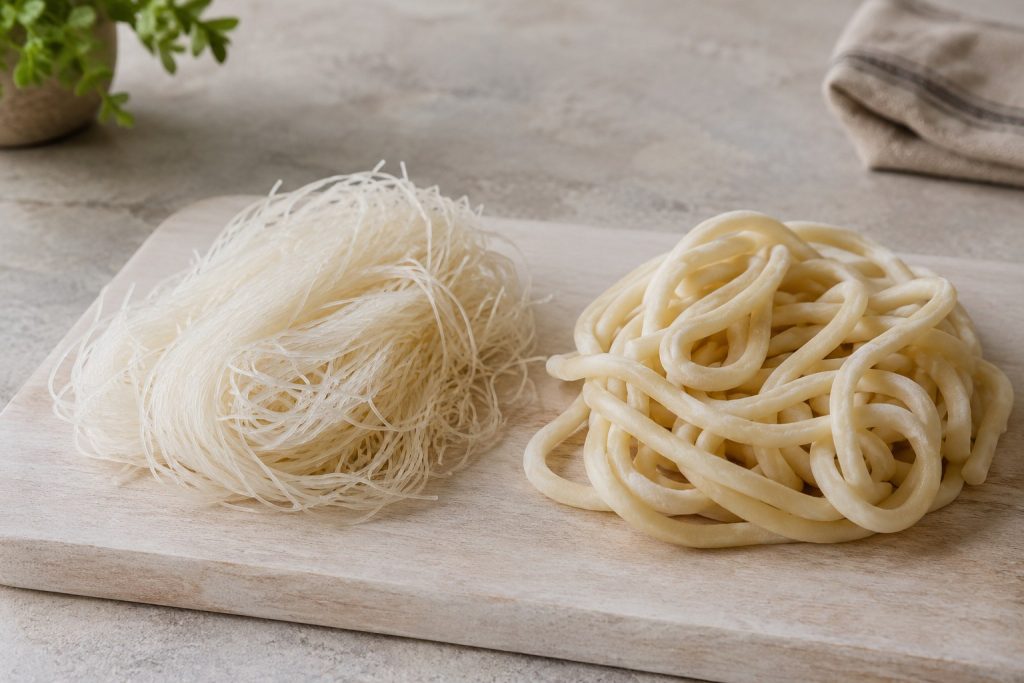
Start with the ingredient list
Thai Kitchen’s cited thin rice noodles contain rice and water. Hakubaku’s cited udon uses wheat flour and salt. Other noodles may contain additional starches, egg or different ingredients. A product name is a useful clue but does not replace the label.
Check gluten and allergens explicitly
Wheat noodles contain wheat; rice-based products should still be checked for their ingredients and any gluten-free claim when required. Also examine sauces and toppings. A rice noodle does not make the whole meal gluten-free if another ingredient introduces gluten.
Follow the noodle’s own preparation
Some rice noodles use soaking instructions, while other products need boiling or a different sequence. Follow the package for the particular thickness and dish. Do not transfer the cooking time from a familiar wheat noodle simply because the strands look similar.
Compare portions in the same state
Dry and cooked weights are not interchangeable because noodles take up water. Compare labels using the same basis, then consider sauce, vegetables and protein foods in the meal. Neither rice nor wheat in the name makes a noodle automatically a better everyday choice.
Sources
Related reading
Should You Weigh Food Raw or Cooked? Match the Food to the Entry
Whole-Wheat vs Regular Pasta: What Changes in the Bowl?
Related reading
Rice Paper vs Egg-Roll Wrappers: Read the Package First
Related reading
Is Orzo Rice or Pasta? The Shape Can Mislead You
Related reading
Does Soba Contain Wheat? Read Beyond the Buckwheat Name
Related reading
About this article: an introductory editorial draft. Not yet independently reviewed by a fitness professional.