Rice Flour vs Sweet Rice Flour: Check the Rice Type
Sweet rice flour is made from sticky, or glutinous, rice and behaves differently from ordinary rice flour. Sweet does not mean added sugar, and glutinous describes stickiness rather than the presence of gluten.
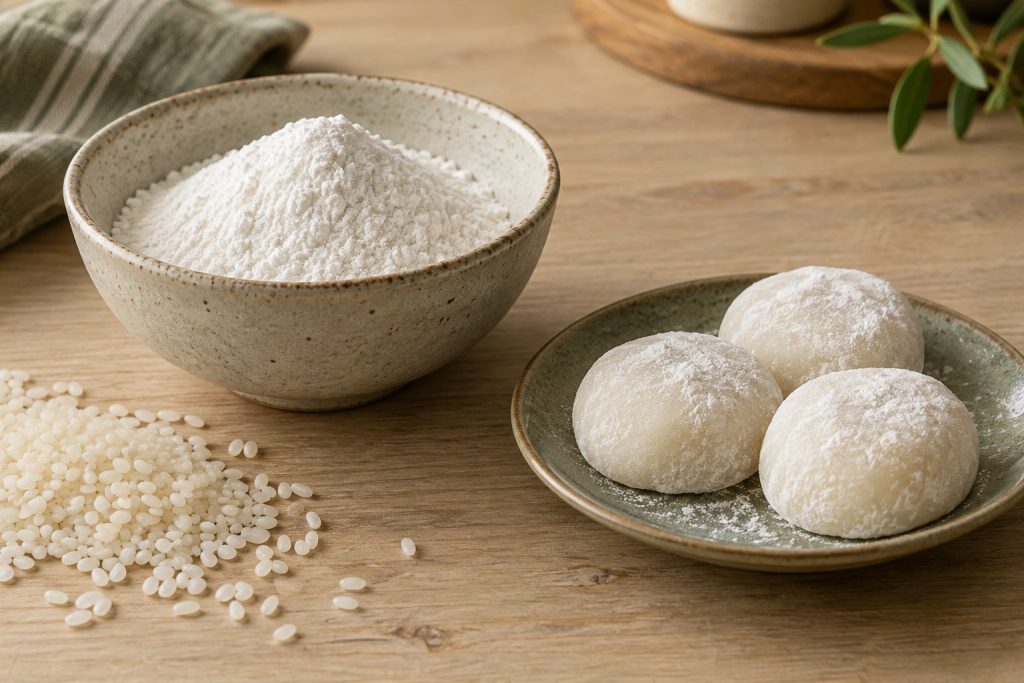
Identify the actual product
Koda Farms distinguishes its Mochiko, milled from short-grain sweet rice, from its regular flour made from medium-grain Kokuho Rose rice. That is a useful example of why two white powders with rice on the label are not necessarily equivalent.
Choose for the intended texture
Recipes using sweet rice flour often seek a cohesive, chewy texture, as in mochi. A recipe asking for ordinary rice flour may be designed for a different result. Follow the specified flour type before experimenting with replacements.
Read more than the front label
Check whether the package contains plain flour, a blend, or a sweetened prepared mix. Koda’s plain Mochiko has no additives, but that statement does not apply to every product carrying the name. Dietary suitability should be checked on the exact package.
Do not assume a universal swap
If you only have another rice flour, find a recipe designed for it or a tested substitution from the recipe author. Adding sugar does not turn ordinary rice flour into sweet rice flour. Label storage jars clearly to keep the distinction visible next time.
Sources
Koda Farms — Rice and flour products; Bob’s Red Mill — Sweet rice flour specification; Bon Appétit — Mochiko cooking and chef interview.
Related reading
Rice Noodles vs Wheat Noodles: Check Ingredients and Cooking
About this article: an introductory editorial draft. Not yet independently reviewed by a fitness professional.