Rice Paper vs Egg-Roll Wrappers: Read the Package First
Dry rice paper and wheat egg-roll wrappers are different products, even when both are sold for rolls. Rice paper usually needs hydration before folding; pliable wheat wrappers are handled according to their own cooking instructions.
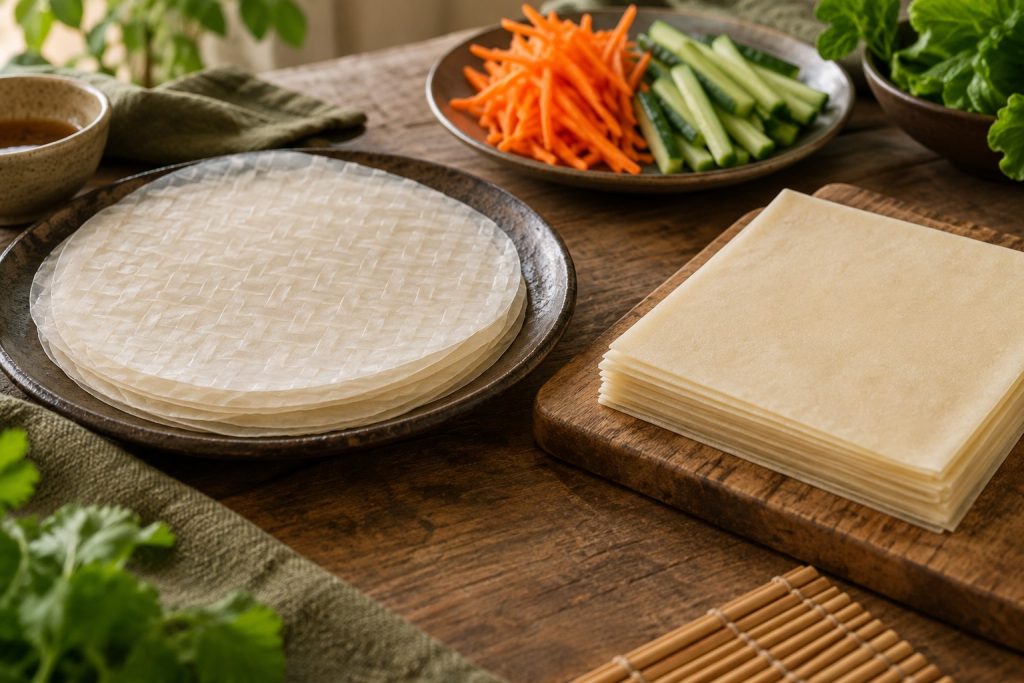
Names can be misleading
Spring-roll wrappers can refer to different kinds of sheets. Blue Dragon’s rice-paper product includes rice flour and tapioca flour. Nasoya’s egg-roll wraps are wheat based. Check the ingredients and directions rather than identifying a wrapper by name alone.
Hydrate only the product that needs it
Follow the rice-paper packet’s water and softening instructions. Do not give wheat dough sheets the same soak automatically. Prepare the filling and work surface first so you can handle each softened sheet without rushing or overfilling it.
Match the wrapper to the recipe
A recipe designed for fresh rice-paper rolls is not a direct instruction for cooking wheat egg rolls. Use the stated wrapper type and cooking method. If changing products, find a recipe written for the replacement rather than assuming identical results.
Check allergens on the actual package
The name egg roll does not prove that a wrapper contains egg: Nasoya’s listed ingredients do not include it, but do include wheat. Other products differ. Read the current label and allergen statement for your dietary needs.
Sources
Related reading
Rice Noodles vs Wheat Noodles: Check Ingredients and Cooking
Corn vs Flour Tortillas: Size, Ingredients, and Meal Context
Related reading
About this article: an introductory editorial draft. Not yet independently reviewed by a fitness professional.