Backpack Liters vs Load Capacity: Space Is Not Weight
A backpack’s capacity in liters describes storage volume. It does not tell you the weight the pack is designed to carry or what will feel manageable for you. Separate volume, load guidance and body fit before choosing a bag.
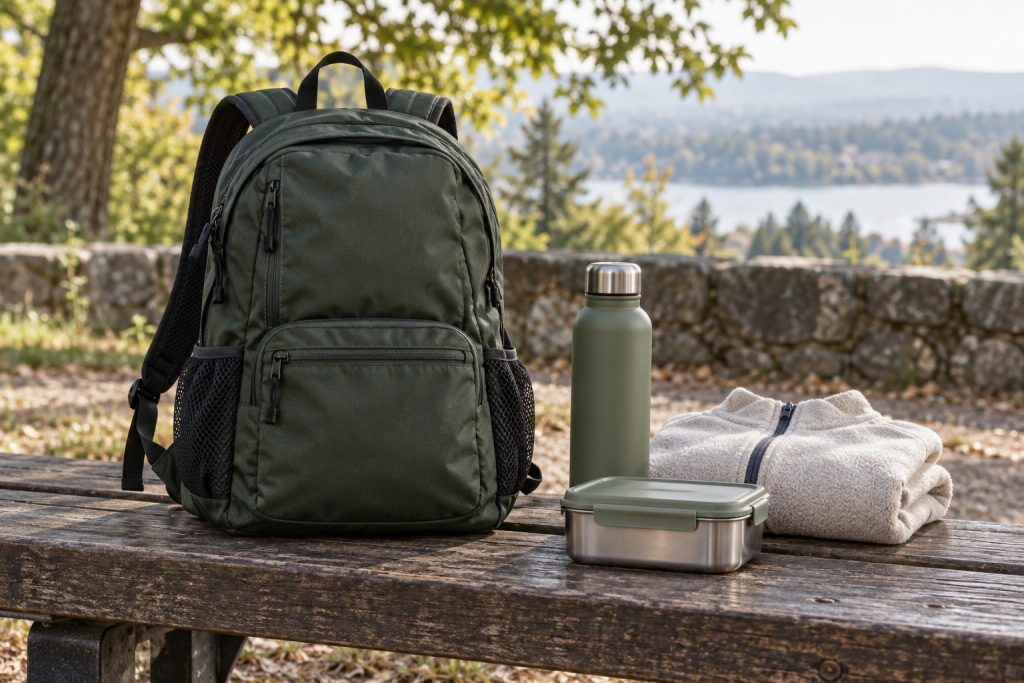
Lay out the actual contents
Gather the water, food, clothing and other essentials for the outing before choosing a capacity. REI links pack size to trip length and the bulk of the equipment. A bulky fleece takes space differently from a compact, dense item.
Read the other specifications
Look for the pack’s own weight and the manufacturer’s recommended load range, if provided. Do not convert liters into a personal carrying limit. Two packs with similar storage volume can have different frames, padding and intended uses.
Check usable space
Try packing your actual items. Pocket layout, opening shape and bottle access can matter more than a small difference in the headline volume. Make sure the bag closes normally without forcing zippers or leaving important items insecurely attached.
Try it with a realistic load
REI emphasizes torso length rather than overall height for backpack fit. Adjust the chosen model according to its instructions and walk with representative contents. A larger capacity does not require filling every space; take the essentials without adding weight simply because it fits.
Sources
REI.
Related reading
How to Check Daypack Fit Before a Long Walk
Hiking vs. Walking: What Changes When You Leave the Pavement?
Related reading
Sleeping Pad R-Value: Insulation Is Not the Same as Thickness
Related reading
About this article: an introductory editorial draft. Not yet independently reviewed by a fitness professional.