Sleeping Pad R-Value: Insulation Is Not the Same as Thickness
A sleeping pad’s R-value describes resistance to heat transfer through the pad. It is not a temperature in degrees and not simply the pad’s thickness. For an overnight walking trip, compare insulation and comfort as separate characteristics.
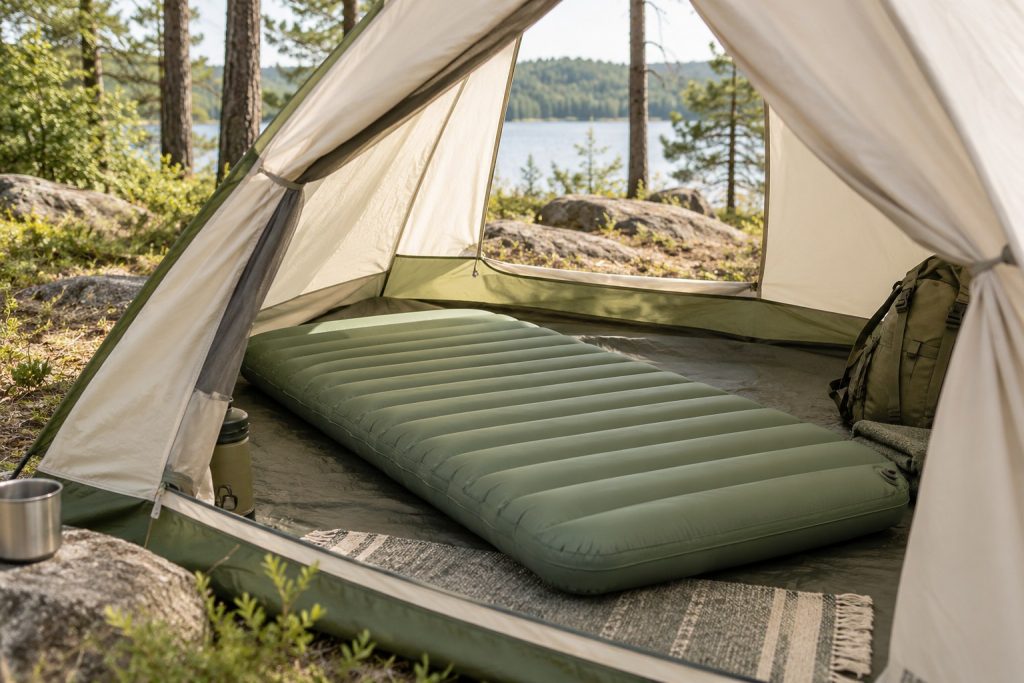
Look for comparable testing
Sea to Summit explains laboratory R-value testing for sleeping pads. Check whether products use the same stated test method before comparing numbers. A vague claim such as warm or winter-ready is less specific than a documented insulation measurement.
Do not turn the number into a temperature
An R-value does not directly promise comfort at a particular air temperature. Read the manufacturer’s use guidance and consider the whole sleeping system. Your sleeping bag, shelter, conditions and personal comfort needs also affect planning.
Check dimensions and feel independently
Thickness, width and length help describe the space and cushioning available. They do not replace the insulation specification. A larger or thicker-looking pad should not automatically be assumed to resist more heat loss than a differently constructed model.
Plan and inspect before the trip
Choose equipment for the expected conditions with appropriate advice, and check the pad’s condition and instructions before packing. This is a guide to reading specifications, not a cold-weather survival rating. Record the exact model so future comparisons use the right data.
Sources
Related reading
About this article: an introductory editorial draft. Not yet independently reviewed by a fitness professional.