Hiking vs. Walking: What Changes When You Leave the Pavement?
Hiking is generally walking on trails or natural terrain, often with more variation in surface and elevation. There is no universal distance that turns a walk into a hike. For planning, the route’s steepness, footing, weather, and distance from help matter more than the label.
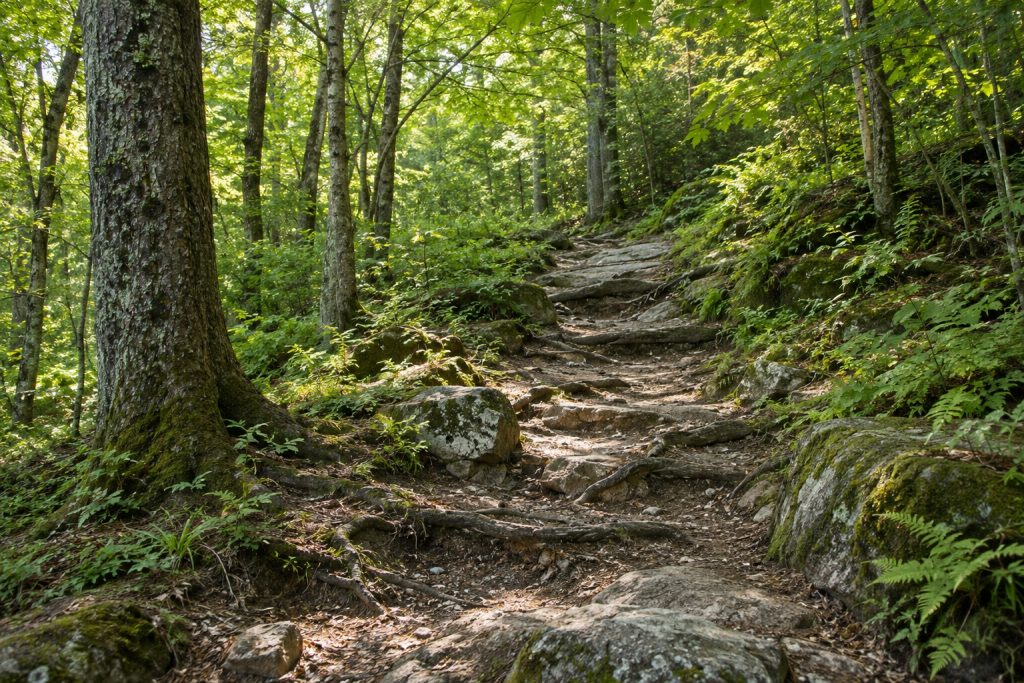
What can make a hike feel harder?
A smooth, level path and a rocky uphill trail can have the same distance but very different demands. A pack, repeated descents, and time spent choosing your footing also change the experience. Do not assume your usual neighborhood pace will carry over.
| Route feature | Why it matters |
|---|---|
| Elevation gain and descent | Climbing and descending change the work and pacing. |
| Surface | Roots, loose stones, or mud can slow progress. |
| Exposure | Shade, sun, wind, and temperature affect preparation. |
| Remoteness | Water, transport, and assistance may be farther away. |
How do you choose a first hiking route?
Choose a well-described, maintained route with a manageable distance and clear options for returning. Check whether the published distance is one-way, round-trip, or a loop. Read the elevation profile as well as the headline mileage.
For example, a listing that says “two miles to the viewpoint” may require four miles of walking to get back. A short trail can still contain steep steps. Ask the land manager about current conditions if the description leaves important details unclear.
What should you prepare?
The National Park Service’s Ten Essentials organize supplies for navigation, changing conditions, and unexpected delays. Its trip-planning guide also emphasizes researching your destination and planning for the actual activity.
Check the forecast and official closures, carry appropriate water and food, and have a navigation plan that does not depend entirely on a live mobile connection. Tell someone your route and expected return. Gear requirements should reflect the setting; a local maintained trail and a remote mountain route are different outings.
Should you aim for your normal walking pace?
Let the terrain determine the pace and leave time for stops. A pace calculation can explain distance and time, but it cannot account for trail conditions you have not considered. Turn around while you still have enough time and energy for the return.
How can you build toward longer hikes?
First make a modest route comfortable, then change one demand at a time, such as distance or elevation. Record the route and conditions so comparisons mean something. Our guides to building a walking habit and incline versus flat walking help connect regular walks with more varied terrain.
Understand added pack weight
See our guide to rucking for beginners for practical examples and the limits of the general guidance.
Compare hiking equipment
See our guide to trekking poles for beginners for practical examples and the limits of the general guidance.
Related reading
How to Check Daypack Fit Before a Long Walk
Related reading
Elevation Gain vs Maximum Elevation: What Does Each Number Tell You?
Related reading
About this article: an introductory editorial draft. Not yet independently reviewed by a fitness professional.