Loop vs Out-and-Back Walk: How Much Distance Is Listed?
An out-and-back walk returns along the route used on the way out. A loop returns by a different section of trail. Neither label alone tells you whether the advertised distance includes every step from your actual starting point.
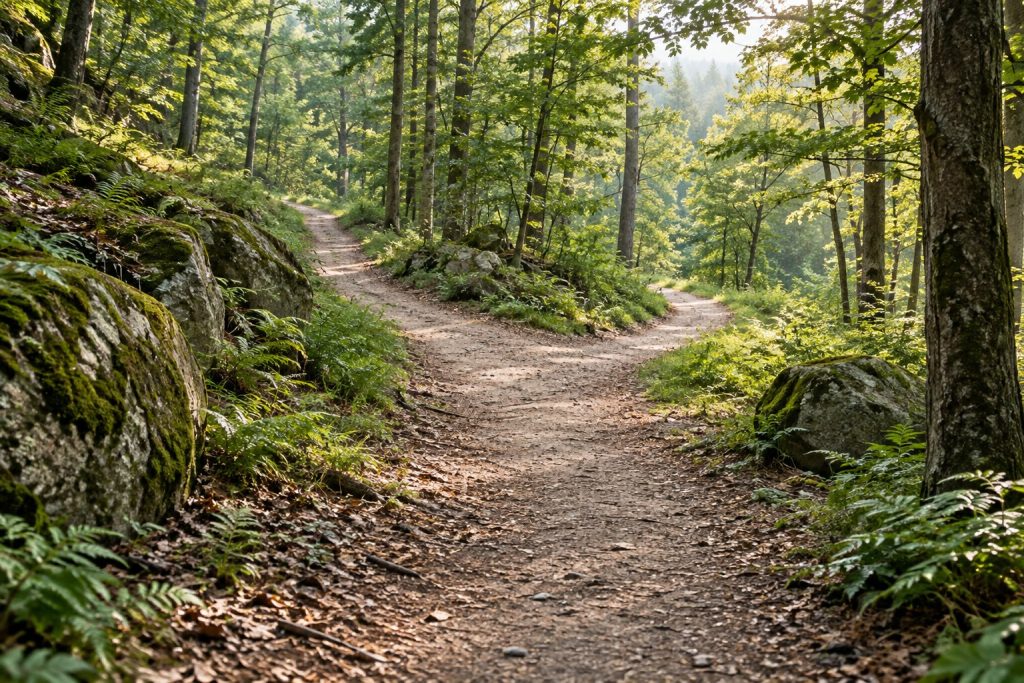
Check one way versus round trip
If a destination is 2 km away along the trail, returning the same way adds another 2 km, making 4 km total. Do not double a distance already labeled round trip. Read the description as well as the headline.
Include the approach to a loop
A loop may begin beyond the parking area or trailhead. The National Park Service’s Sandhill Loop description distinguishes the loop itself from longer complete walks that include access trails. Add the outward and return approaches when estimating your own total.
Look for mixed route shapes
Some walks combine an out-and-back approach with a loop at the end, as the NPS Beaver Slide description shows. Trace the complete route on the map, including junctions, rather than choosing solely by a loop icon.
Plan for the whole outing
Distance does not capture climbing, surface or current closures. Check the responsible land manager’s current information and allow time for the return. These examples explain distance labels; they are not a claim that a particular trail is currently open or suitable for you.
Sources
National Park Service; National Park Service.
Related reading
Hiking vs. Walking: What Changes When You Leave the Pavement?
Elevation Gain vs Maximum Elevation: What Does Each Number Tell You?
Related reading
Map Scale for Walkers: Turn a Small Line into a Real Distance
Planning a walk around a deadline? Use the time-budget example and route card.
About this article: an introductory editorial draft. Not yet independently reviewed by a fitness professional.