Backpack Sizing: Measure Your Torso, Not Just Your Height
Your standing height does not tell the whole story of backpack fit. For packs sized by torso length, measure the part of your back specified by the manufacturer and compare it with that model’s fit range.
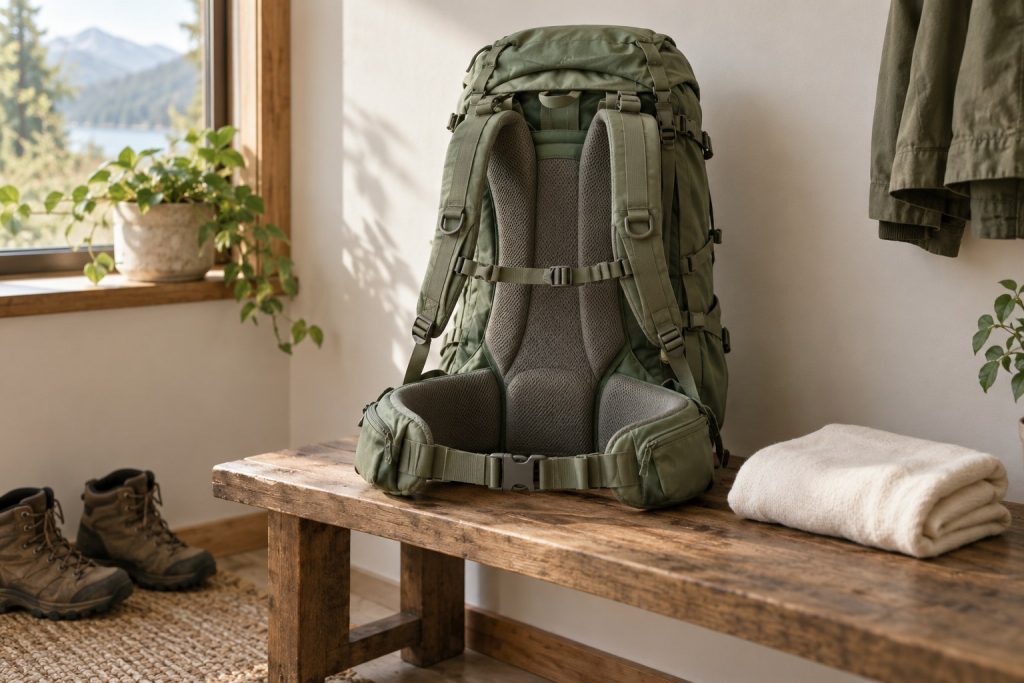
Find the measurement points
Osprey measures from the prominent C7 vertebra at the base of the neck to the level of the iliac crest, at the top of the hip bones. Follow its illustrated guide and ask someone to help; measuring your own back can be awkward.
Use the exact model’s chart
Osprey notes that some adult packs have adjustable torso lengths while others have a fixed fit range. A medium label is not a universal measurement. Check the product page rather than transferring a clothing size to a backpack.
Check the rest of the harness
Torso length is a starting point, not a complete fit test. Try the hip belt and shoulder straps with the clothing and a manageable load you expect to carry. Adjust them according to the pack instructions.
Keep volume separate
A larger capacity describes room for equipment, not automatically a longer back. Record both the pack size and capacity when comparing options. If between ranges or uncomfortable after adjustment, get fitting help rather than tightening every strap harder.
Sources
Related reading
About this article: an introductory editorial draft. Not yet independently reviewed by a fitness professional.