Canned vs. Dried Beans: Compare Convenience, Sodium, and Cost
Canned and dried beans can both be practical meal ingredients. Canned beans save preparation time; dried beans give you more control over a batch. Compare the same bean type in a ready-to-eat portion, then consider sodium, preparation, cost, and likely waste.
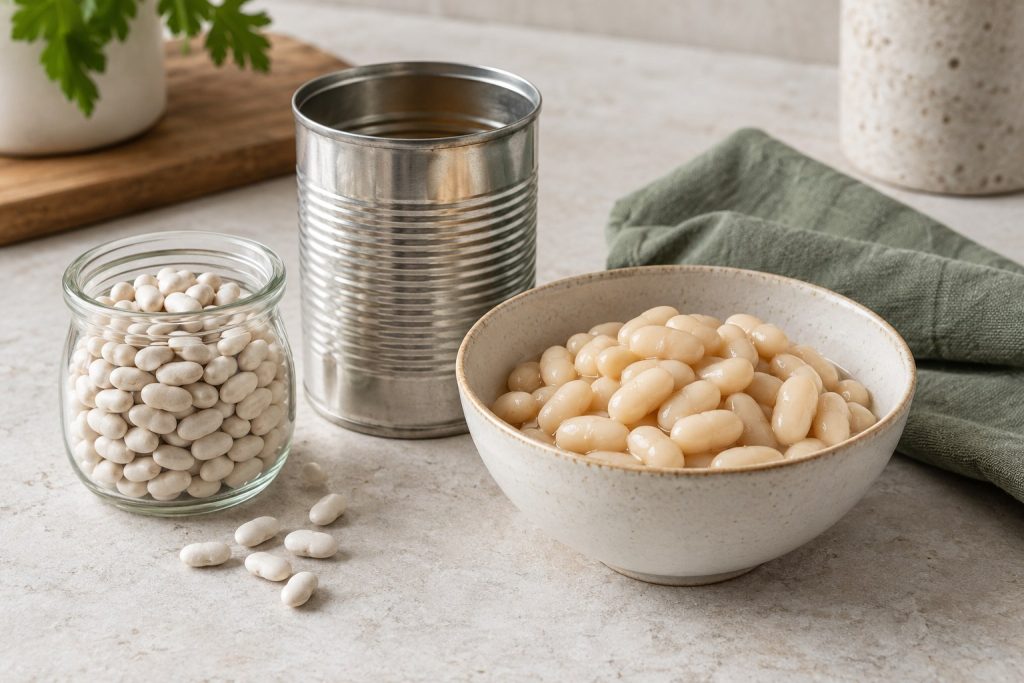
What changes when beans come in a can?
Ordinary commercially canned beans are already cooked. Dried beans require preparation and thorough cooking according to the package. Do not assume soaking alone makes them ready to eat, or that every bean variety uses the same cooking method.
A budget-cooking guide hosted by USDA MyPlate presents canned beans as a time-saving option and suggests lower-sodium versions or draining and rinsing. That is a preparation choice, not a claim that one format is always healthier.
How should you compare sodium?
Compare the same ready-to-eat amount and check whether the label refers to drained contents or contents with liquid. Read the ingredient list too: plain beans and beans in a seasoned sauce are different products.
Draining and rinsing can reduce sodium, but the amount removed varies. Do not subtract a fixed percentage from every label and call it exact. “No salt added” also does not mean that a food necessarily contains no sodium. Use the package information for the product you have.
Are dried beans always cheaper?
Compare cost per usable cooked portion rather than the dry bag’s weight with the can’s total weight. Prices, yield, cooking costs, and how much gets eaten can change the result. A large cheap batch is less useful if most of it is wasted.
For a fictional price example, a batch costing $2 that provides 4 usable portions costs $0.50 per portion before cooking costs. A $1.50 can providing 2 comparable portions costs $0.75 per portion. These are arithmetic examples, not current market prices or guaranteed yields.
Which format fits your meals?
Choose canned beans when convenience makes the meal happen; choose dried beans when you have time and a plan for the cooked batch. Follow the package’s cooking and storage instructions. Dry beans and cooked beans are not interchangeable by weight in a recipe or food log.
Read how to match dry and cooked food weights for a batch example. Our protein-food portion guide helps compare the quantity you serve, and fresh versus frozen vegetables applies the same practical approach to the rest of the meal.
Related reading
Fresh vs. Dried Fruit: Portions, Sugar, and Practical Uses
Related reading
Trail Mix vs. Plain Nuts: Compare Ingredients and Portions
Related reading
Tofu vs. Tempeh: A Practical Guide for Everyday Meals
Related reading
Lentils vs. Chickpeas: Which Fits Your Meal?
Related reading
Black Beans vs Kidney Beans: Choose for the Recipe
Related reading
About this article: an introductory editorial draft. Not yet independently reviewed by a fitness professional.