Tofu vs. Tempeh: A Practical Guide for Everyday Meals
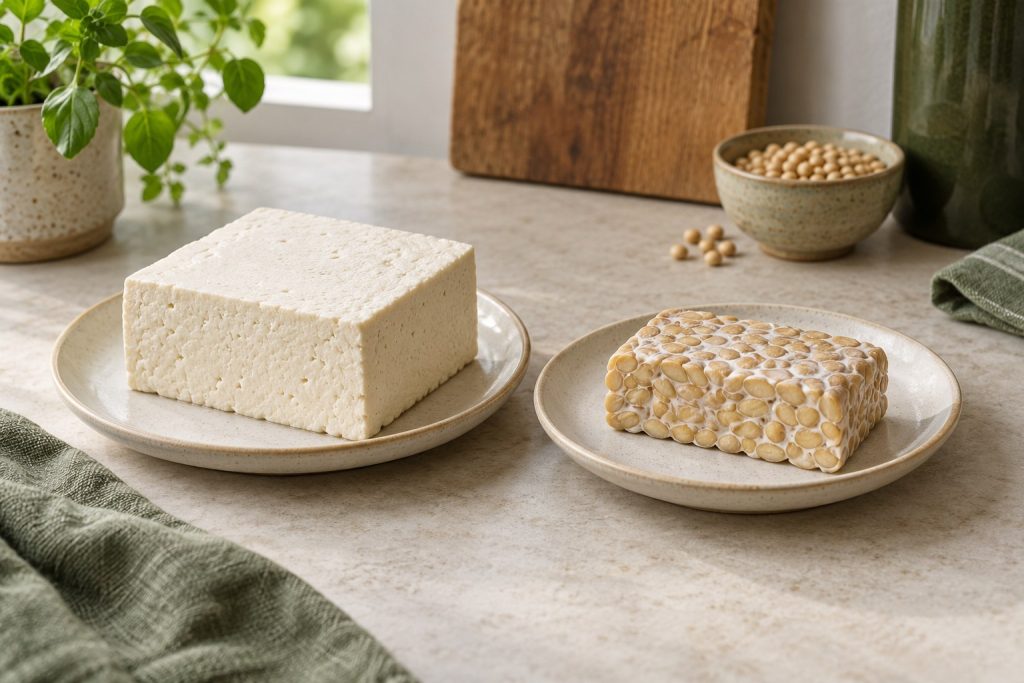
Tofu is made from coagulated soy milk, while traditional tempeh is made from fermented soybeans bound into a firm cake. They offer different textures and are not automatic substitutes in every recipe. Choose by the dish you want to make, then compare the specific products and portions.
How does the texture affect cooking?
Tofu comes in different firmness levels, including soft silken varieties and firmer blocks. Tempeh usually retains a visible bean structure. Cleveland Clinic highlights texture as an important difference. Check what your recipe requires: a product suited to blending may behave very differently from one intended to hold its shape in slices.
Which has more protein?
Use the labels rather than a single number for all tofu or tempeh. Water content, added ingredients, and serving sizes vary. Compare an equal weight first, then calculate the amount in your intended portion. A larger package does not necessarily have a higher protein concentration, and marinade contributes to the finished meal too.
What should you check before preparing it?
Read storage and preparation instructions, including whether the product needs cooking. Do not assume fermentation means it can be eaten straight from any package. Drain or press tofu only as appropriate for the product and recipe. Keep utensils and surfaces clean and follow the stated instructions after opening.
How do you choose a first purchase?
Buy a small quantity for a specific recipe instead of a large pack without a plan. Compare plain and seasoned versions separately, including salt and ingredients. Both traditional products contain soy; fermentation does not make tempeh suitable for a soy allergy. Some versions also contain grains, so check the actual label for your dietary needs.
Sources
Related reading
Plant Protein vs. Animal Protein for Building Muscle
Canned vs. Dried Beans: Compare Convenience, Sodium, and Cost
Related reading
Edamame vs Mature Soybeans: Buying, Cooking, and Portions
Related reading
Silken vs Firm Tofu: Choose the Texture Your Recipe Needs
Related reading
About this article: an introductory editorial draft. Not yet independently reviewed by a fitness professional.