Black Beans vs Kidney Beans: Choose for the Recipe
Black beans and kidney beans can both supply plant protein and fiber. Choose between them mainly for the recipe, texture and product label rather than assuming the darker or larger bean is automatically healthier.
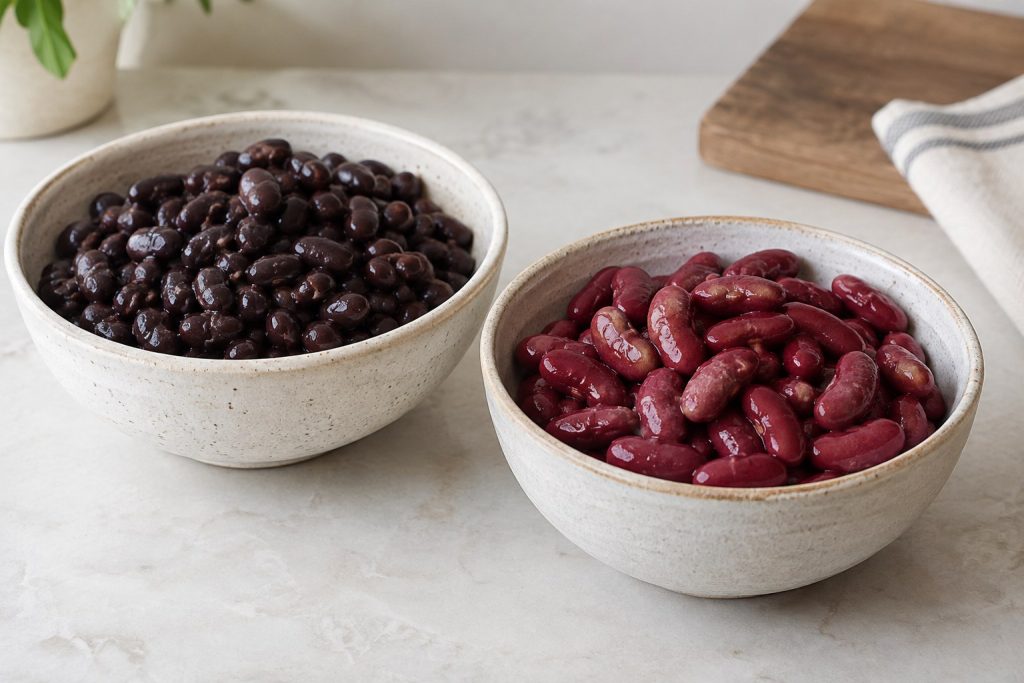
Start with the texture you want
Black beans are smaller and work well in bowls, soups and mashed fillings. Kidney beans are larger and give chili or salads a more substantial bite. Either can substitute in many dishes, but the appearance and texture will change.
Compare equivalent products
Compare plain cooked beans with plain cooked beans, not dried beans with a ready-to-eat can. Check serving weight, protein, fiber and sodium. A seasoned sauce can contribute ingredients that have little to do with the bean variety itself.
Canned beans simplify preparation
Commercially canned beans are already cooked; follow the label for serving and storage. Draining and rinsing is useful when the recipe does not need the canning liquid. Choose a no-salt-added option if that better suits your needs rather than expecting bean color to predict sodium.
Take dried kidney-bean cooking seriously
Raw or undercooked kidney beans can contain harmful levels of lectins, as FDA explains. Do not eat them after soaking alone or assume gentle slow-cooker heating makes them safe. Use a reliable preparation method with the required boiling stage, or choose canned beans when you want a simpler option.
Sources
University of Florida IFAS Extension; FDA.
Related reading
Canned vs. Dried Beans: Compare Convenience, Sodium, and Cost
About this article: an introductory editorial draft. Not yet independently reviewed by a fitness professional.