Frozen vs. Fresh Vegetables: Choose What You Will Use
Fresh and frozen vegetables can both fit a nutritious eating pattern. Choose by the dish, storage space, ingredients, cost, and what you will actually use. There is no universal rule that fresh always contains more nutrients or frozen is always the better purchase.
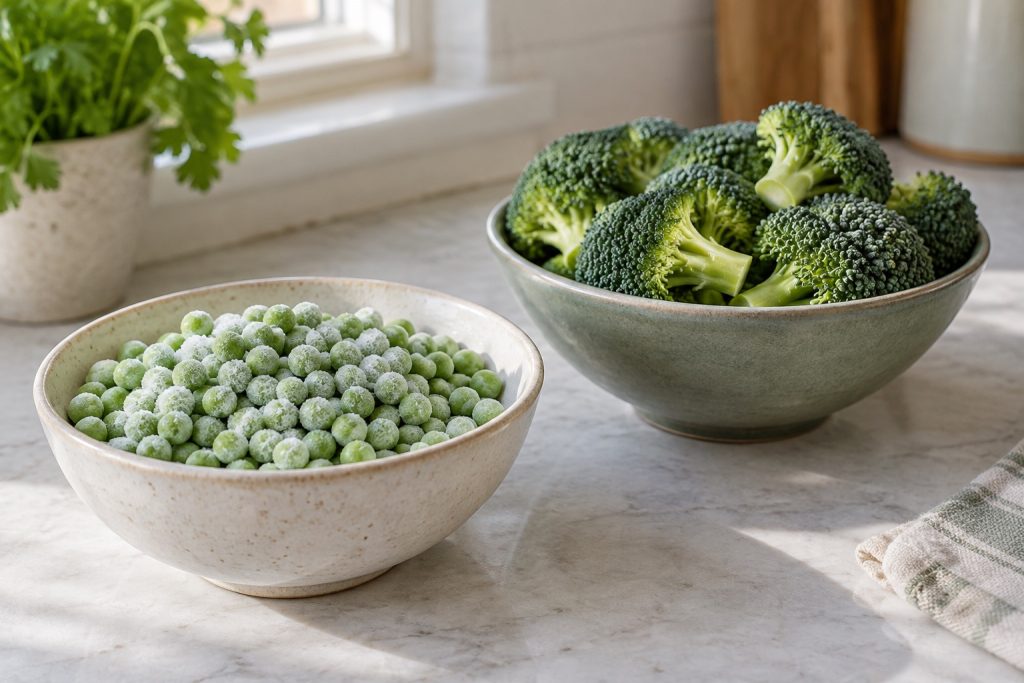
Are frozen vegetables still nutritious?
Yes. The Academy of Nutrition and Dietetics’ produce guide includes fresh and frozen options in a healthful eating pattern. The specific vegetable, storage, preparation, and added ingredients matter more than treating either format as one uniform food.
Compare like with like where possible. Frozen peas and fresh broccoli are different vegetables; a difference between them does not isolate the effect of freezing.
Which is better for a particular meal?
Fresh vegetables may suit dishes where crisp texture is central. Frozen vegetables can be convenient for soups, cooked side dishes, and meals where a pre-cut portion saves time. Follow the package’s preparation instructions rather than assuming frozen produce is ready to eat without cooking.
| Planning need | Useful question |
|---|---|
| A raw salad | Which fresh ingredients provide the texture you want? |
| A quick cooked meal | Would a ready-portioned frozen vegetable help? |
| Shopping less often | Do you have reliable freezer space? |
| A flavored frozen mix | What sauces, salt, or other ingredients are included? |
How should you compare the price?
Look at usable portions, not only package price. If you regularly discard part of a large fresh purchase, a smaller purchase or resealable frozen bag may suit your routine better.
For an illustrative calculation, a $3 bag providing six usable portions costs $0.50 per portion. A $2 purchase providing three usable portions costs about $0.67 each. These are invented prices that demonstrate the method, not current market prices.
What storage habits help?
Keep frozen products stored as directed, reseal opened bags, and avoid leaving portions out while deciding what to cook. Store fresh vegetables appropriately and plan to use more perishable items first. Check product-specific instructions for safe handling.
How do vegetables fit a training meal?
Build the meal as a whole rather than expecting one ingredient to improve a workout. Pair food choices with your appetite, schedule, and needs. See protein-food portions, grain choices, and pre-workout eating.
Related reading
Canned vs. Frozen Vegetables: A Practical Shopping Guide
Related reading
About this article: an introductory editorial draft. Not yet independently reviewed by a fitness professional.