Whole Grains vs. Refined Grains: Read Past the Package Color
Whole grains retain the bran, germ, and endosperm of the grain; refining removes the bran and germ. The distinction concerns the grain’s components, not whether a product looks brown or comes in a health-focused package. Read the ingredients and nutrition information to understand a specific food.
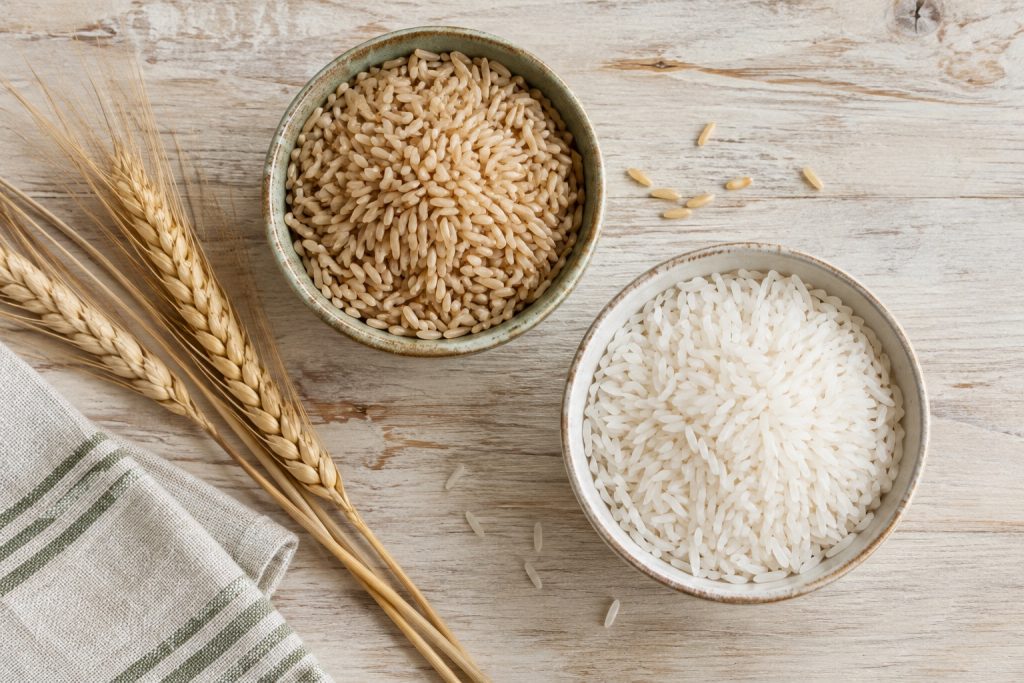
What counts as a whole grain?
Examples include oats, brown rice, and whole-wheat flour. A grain can be ground or rolled and still be whole grain if its components remain in the appropriate proportions. “Whole” does not mean the food must look like an intact seed.
UC Davis’s grain-education material illustrates the kernel’s components and the difference between whole and refined grains.
What does refining change?
Removing parts of the kernel changes the fiber and nutrient profile as well as cooking qualities and texture. Enrichment can restore certain nutrients, but an enriched product is not therefore a whole-grain product.
A finished food can also mix whole and refined ingredients. That is why one label word cannot describe every nutritional feature of the product.
Does multigrain mean whole grain?
Not necessarily: it describes multiple grains, not whether each is whole. Check the ingredient list for specific whole-grain ingredients. Brown coloring, seeds on the surface, and words such as “wheat” alone are not enough to establish the composition.
| Check | What it tells you |
|---|---|
| Ingredient names | Which grains and other ingredients are present. |
| Serving amount | The basis for the nutrition numbers. |
| Fiber and other nutrients | How the actual product compares per relevant portion. |
How can you compare two products?
Choose the amount you would actually eat and compare on that basis. One bread label may describe one slice and another two. A dry-rice portion cannot be compared directly with the same numerical weight of cooked rice.
Our nutrition-label guide explains the same serving-size principle using protein examples.
Must every pre-workout grain be whole grain?
Your overall eating pattern and immediate exercise comfort are separate considerations. A familiar, easier-to-tolerate option may suit a snack close to activity. See fiber before a workout and pre-workout meals for timing context.
Related reading
Rolled Oats vs. Steel-Cut Oats: Texture, Time, and Portions
Related reading
Brown Rice vs. White Rice: More Than a Color Difference
Related reading
Sourdough vs Whole-Grain Bread: Two Different Labels
Related reading
Polenta vs Cornmeal: Read the Grind and the Cooking Instructions
Related reading
Pearled vs Whole Farro: Read the Grain Before Setting the Timer
About this article: an introductory editorial draft. Not yet independently reviewed by a fitness professional.