Pearled vs Whole Farro: Read the Grain Before Setting the Timer
Whole farro retains its bran, germ and endosperm; pearling removes some or all of the bran. A bag labeled farro therefore does not automatically contain a whole grain. Check the processing description before borrowing another package’s cooking instructions.
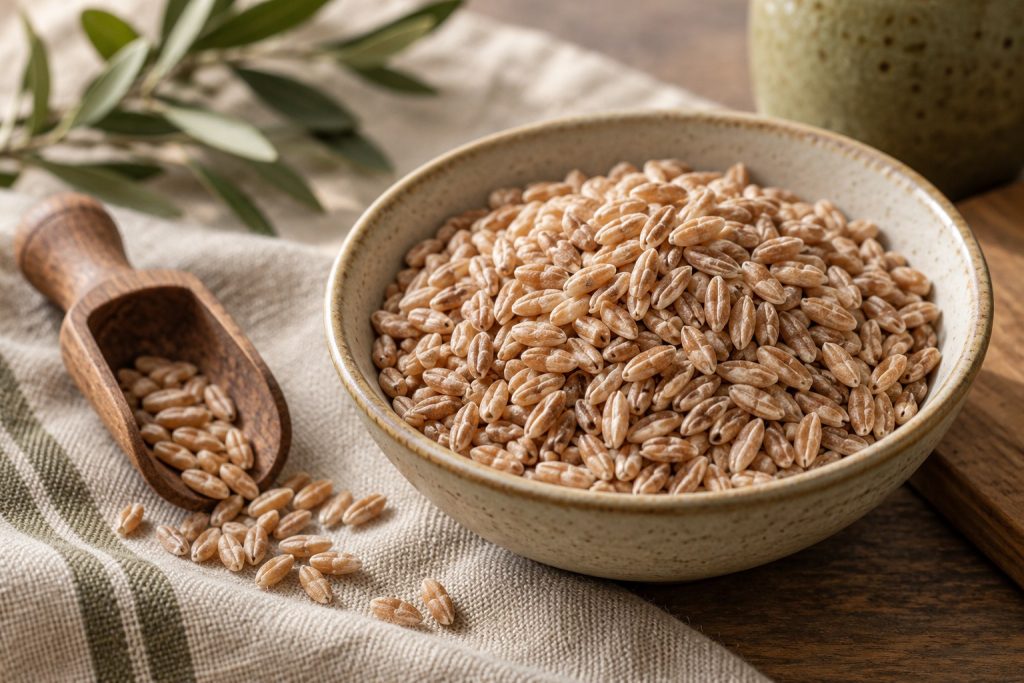
Look for the processing words
The Whole Grains Council advises looking for whole farro and avoiding pearled labels when seeking a whole-grain product. Semi-pearled also indicates that some bran has been removed. Organic describes a different attribute and does not settle this question.
Use the packet’s preparation method
Bob’s Red Mill explains that lightly scratching or pearling its farro encourages faster cooking. Whole farro may need a different method, including soaking when instructed. Do not impose one universal cooking time on all products sold under the same broad name.
Compare the form used in the recipe
A recipe written for a quick-cooking product may behave differently with an intact grain. Check the required form before adding farro directly to a soup or one-pot dish, where extra cooking time also affects the other ingredients.
Keep the comparison practical
Farro is wheat and contains gluten; pearling does not change that identity. Compare nutrition labels for equivalent dry or cooked portions rather than mixing the two. Choose a product you can prepare for the meal you want, without treating the name ancient grain as a complete specification.
Sources
Whole Grains Council — Grain Guide; Bob’s Red Mill — Farro.
Related reading
Whole Grains vs. Refined Grains: Read Past the Package Color
Should You Weigh Food Raw or Cooked? Match the Food to the Entry
About this article: an introductory editorial draft. Not yet independently reviewed by a fitness professional.