What to Eat Before a Workout: Timing and Simple Options
A useful pre-workout meal is one you can comfortably digest before the activity you have planned. Allow more time after a large meal and choose a smaller, familiar snack when training is closer. You do not need a special fitness food or an identical snack before every session.
How long before exercise should you eat?
Mayo Clinic’s eating and exercise guidance suggests roughly three to four hours after a large meal and one to three hours after a small meal or snack. These are starting points, not deadlines that guarantee digestive comfort. It also suggests keeping food light when exercising within an hour of breakfast.
The practical variables are how much you eat, what the meal contains, the activity, and your own tolerance. A short walk after lunch is a different situation from a demanding running session. Do not force a full meal immediately before training simply because an online plan includes one.
What are some simple pre-workout food options?
The examples below are ordinary meal-planning ideas, not a personalized fueling prescription. Choose foods that fit your allergies, preferences, and usual diet, and adjust the portion to your appetite and available time.
| Situation | Example to consider | What to check |
|---|---|---|
| A meal several hours beforehand | Rice with a familiar protein food and vegetables | Whether the portion leaves you comfortable |
| A smaller meal with time to digest | Oatmeal or toast with yogurt, if tolerated | Your usual response to those foods |
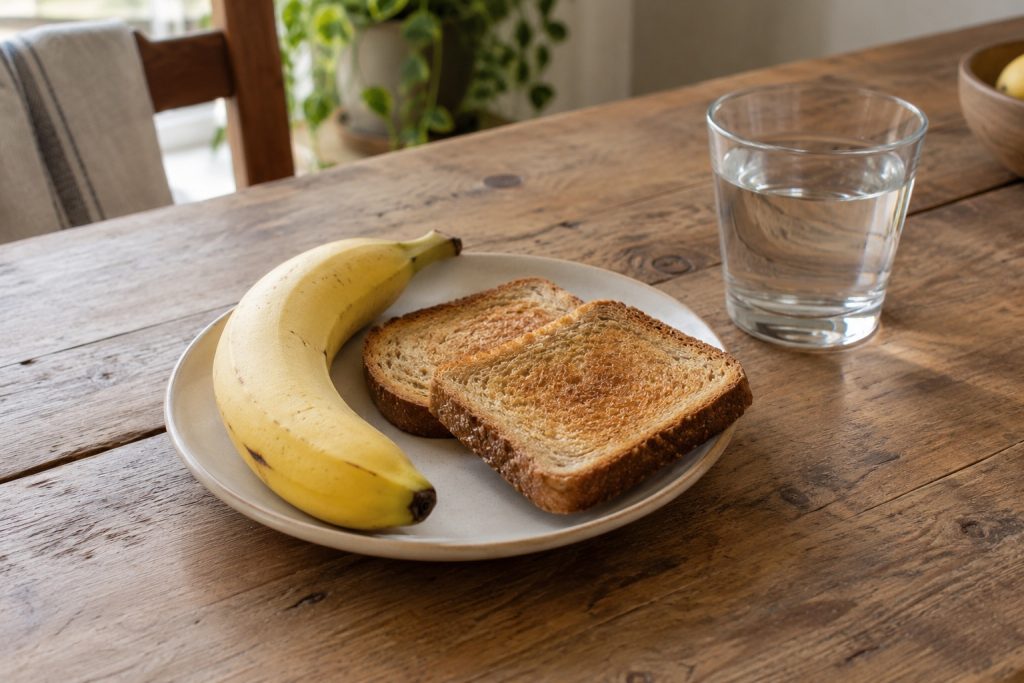
| Only a little time and some hunger | A banana or a small piece of toast | Whether a small snack sits well |
| A short, easy outing after a recent meal | No additional snack may be needed | Hunger, comfort, and the actual session |
What if you train early in the morning?
Prepare an option the night before, so that the decision does not depend on an elaborate breakfast. Record what you ate and how the workout felt. If a full breakfast is uncomfortable, compare a smaller familiar option on another similar day rather than changing food, workout duration, and intensity all at once.
A morning session is also a scheduling question. Our guide to morning versus evening workouts can help you think about a routine you can actually repeat.
Do you need a pre-workout drink?
A food decision and a supplement decision are separate. The words “pre-workout” on a tub do not tell you whether its ingredients are suitable for you. Do not assume that an energy drink, protein shake, and carbohydrate snack serve the same purpose. Read ingredient and caffeine labels before adding a product.
When does general advice stop being enough?
Long endurance events, repeated sessions, persistent digestive problems, and diabetes medication can require more individualized planning. A sports dietitian or clinician can help in those situations. For everyday sessions, begin with familiar meals, a manageable schedule, and water access; see our separate guide to electrolytes during workouts for the hydration question.
Plan the next meal
See our guide to protein timing after a workout for practical examples and the limits of the general guidance.
Review meal timing and comfort
See our guide to fiber before exercise for practical examples and the limits of the general guidance.
A meal-and-session worksheet you can copy
Write a short note before the session, then add what actually happened. You can keep it beside your workout log; no calorie target or supplement purchase is needed to use this worksheet.
- Activity, start time and planned duration:
- Last meal or snack: time, foods and approximate portion:
- Hunger and digestive comfort before starting:
- What happened during the session:
- When and what you plan to eat next:
- One question to revisit on a similar day:
Worked example: an evening session
An invented schedule: lunch at 13:00, a familiar small snack at 16:30 if hungry, and training at 18:00 for 45 minutes. Dinner is planned for 19:15. Lunch is five hours before training; the snack is 90 minutes before; dinner is 30 minutes after the planned finish. These clock intervals describe the schedule, not a rule that makes these foods or portions right for everyone.
If the session starts late or lasts longer, record the actual times. Compare similar days before changing several things at once. A note such as “felt full after the snack” is an observation, not proof of an intolerance or a diagnosis. Persistent problems belong with a qualified professional.
Keep the next step simple
Use the beginner training path for the exercise plan. Choose a familiar food option, check that it fits your schedule, and leave space to record your response. This worksheet supports planning; it does not replace medical or sports-nutrition advice.
About this article: an introductory editorial draft. Not yet independently reviewed by a fitness professional.