Fresh vs Frozen Spinach: Match the Form to the Recipe
Fresh spinach is useful when you want intact leaves. Frozen spinach is convenient for many cooked dishes, especially fillings and sauces. The better choice often depends on texture, water and how soon you will use it.
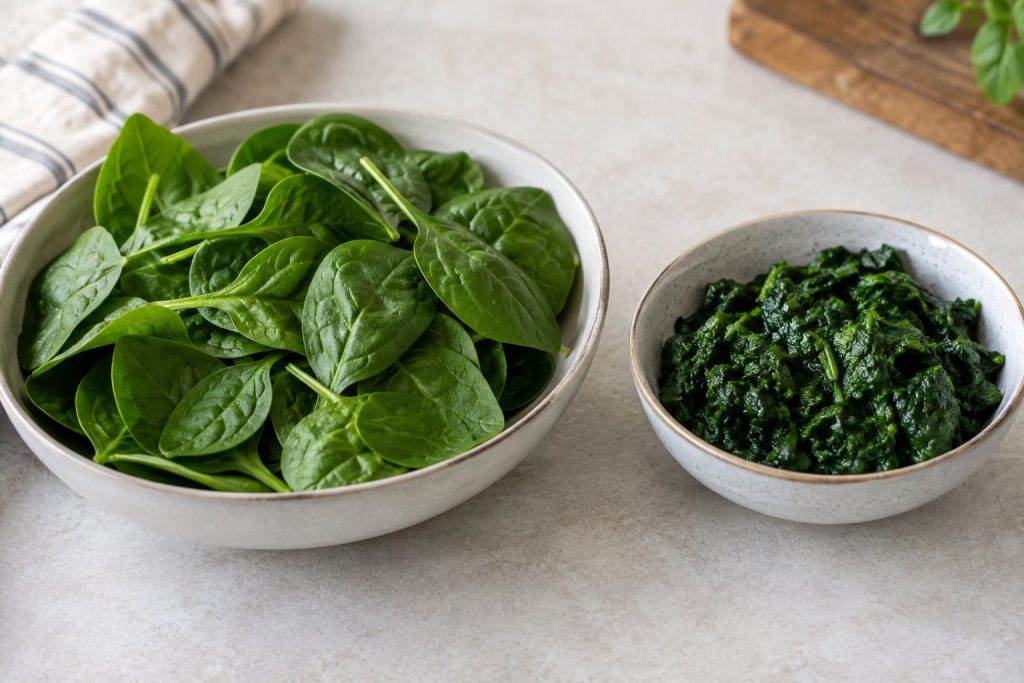
Choose for the finished texture
Fresh leaves suit salads and can also be cooked. Frozen spinach generally becomes softer after thawing and cooking, so it is less suited to replacing crisp salad leaves. Whole-leaf and chopped frozen products also behave differently in a recipe.
Manage the water
Thawed spinach can release considerable liquid. Follow the recipe when draining or squeezing it, particularly for a pie or pizza filling. A soup may accommodate that liquid instead. Illinois Extension’s spinach pizza recipe specifically calls for squeezing thawed spinach to remove excess moisture.
Do not swap volumes blindly
A loose cup of raw leaves is not equivalent to a packed cup of cooked or thawed spinach. Use the recipe’s specified form and weight when possible. Plain spinach and spinach in a cream sauce are also different products for a nutrition comparison.
Read preparation instructions
Frozen does not necessarily mean ready to eat. Follow the package’s cooking and storage directions rather than assuming thawing is sufficient. Buy fresh quantities you can use promptly, or keep a frozen option for planned cooked meals; neither format guarantees a better overall diet.
Sources
University of Illinois Extension; USDA FSIS.
Related reading
Frozen vs. Fresh Vegetables: Choose What You Will Use
Canned vs. Frozen Vegetables: A Practical Shopping Guide
Related reading
Dried vs Fresh Mushrooms: Start with the Form the Recipe Needs
Related reading
Romaine Hearts vs a Whole Head: What Has Been Trimmed?
Related reading
About this article: an introductory editorial draft. Not yet independently reviewed by a fitness professional.