Whole-Wheat Pastry Flour vs Regular Whole-Wheat Flour
Whole-wheat pastry flour is milled from softer, lower-protein wheat than the hard wheat commonly used for regular whole-wheat flour. It still includes the whole kernel. The word pastry describes intended baking behavior, not removal of the bran.
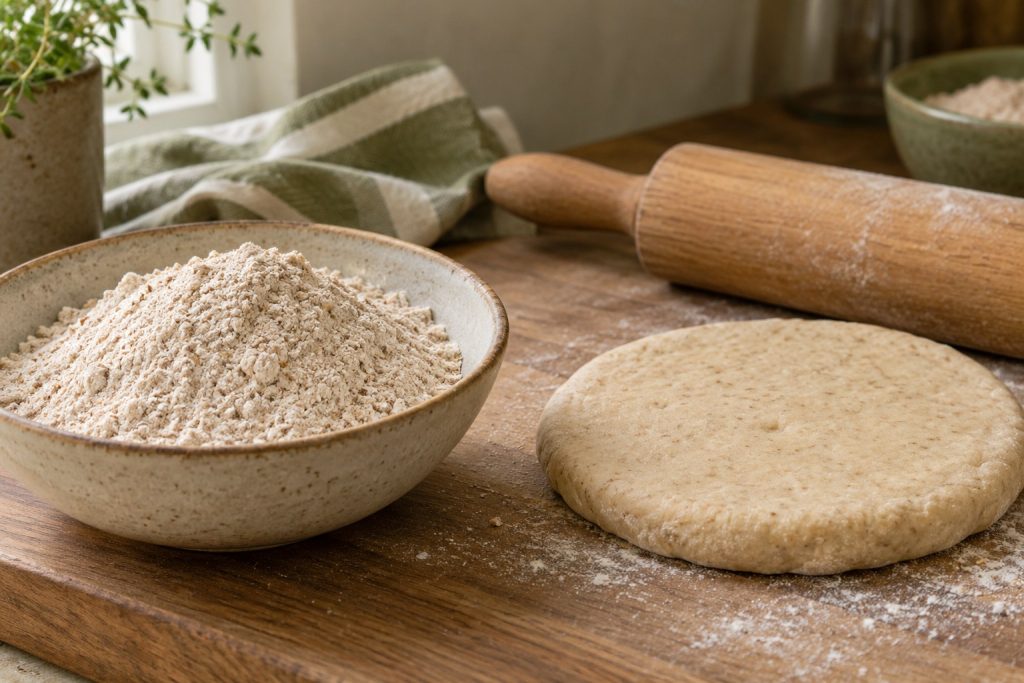
Separate grain completeness from dough strength
King Arthur’s whole-grain guide describes whole-wheat pastry flour as soft wheat flour intended for tender results. Whole grain and gluten-forming strength are different characteristics. A flour can contain the whole kernel without behaving like a strong bread flour.
Choose for the structure you need
The guide recommends this flour for cookies, pie crusts, pastries and quick breads rather than yeast breads. Use a recipe designed for it when texture matters. The choice is about the baked result, not a claim that one flour is suitable for every meal.
Do not assume a universal straight swap
Replacing a flour can change dough handling and the finished texture. Follow tested substitution instructions rather than adjusting flour and liquid repeatedly by guesswork. If a recipe blends flours, preserve the stated blend for a more reproducible first attempt.
Read the exact product name
Plain pastry flour and whole-wheat pastry flour are not identical descriptions. Names also vary between countries, so check ingredients and the manufacturer’s intended uses. Both conventional wheat versions contain gluten; pastry does not mean gluten-free or self-rising.
Sources
King Arthur Baking — Whole Grains.
Related reading
Bread Flour vs All-Purpose Flour: What Changes in the Dough?
Whole Grains vs. Refined Grains: Read Past the Package Color
Related reading
White Whole-Wheat Flour: Why It Is Still Whole Grain
Related reading
Cake Flour vs Pastry Flour: Check the Product, Not a Fixed Ranking
About this article: an introductory editorial draft. Not yet independently reviewed by a fitness professional.