Bread Flour vs All-Purpose Flour: What Changes in the Dough?
Bread flour generally has more protein than all-purpose wheat flour, giving it more potential to develop a strong dough. That can help some breads, but it does not make bread flour the best choice for every recipe or a special fitness food.
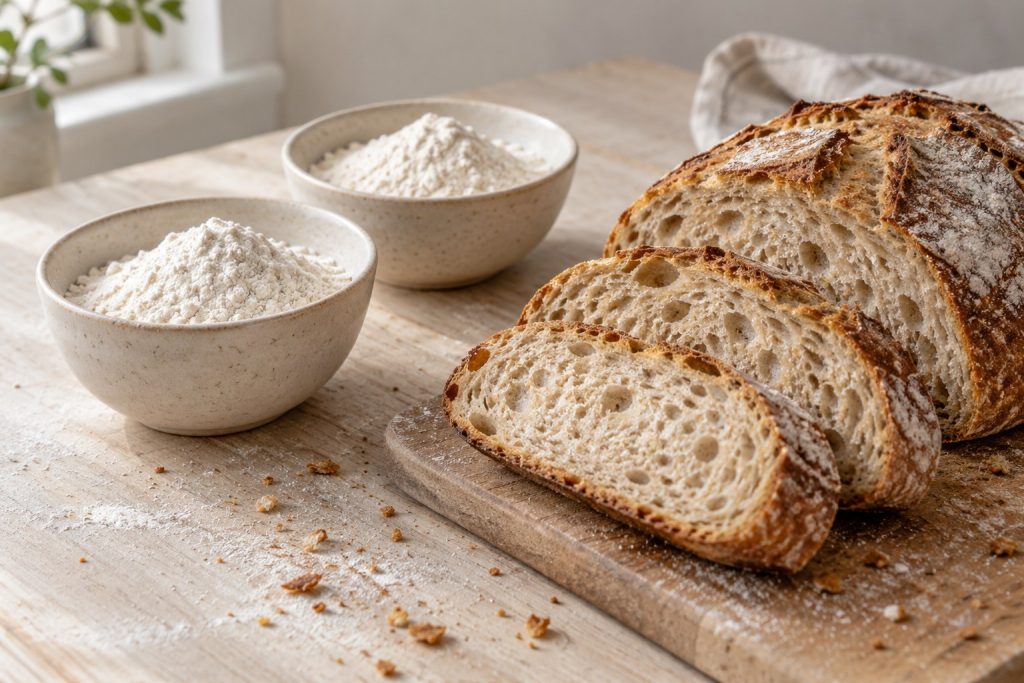
Understand the baking difference
King Arthur explains that wheat proteins form gluten and that higher-protein flour can absorb more liquid. Strong, elastic dough is useful for many yeast breads. A cake or tender pastry is a different task, so more strength is not always the goal.
Check the actual brand
Flour names are not exact protein specifications across manufacturers or countries. Read the product description rather than assuming every bag labeled bread flour behaves identically. This comparison concerns wheat flour, not gluten-free blends with similar product names.
Substitute with expectations
King Arthur allows bread and all-purpose flour substitutions in many bread recipes in a pinch, while recommending the specified flour for the intended result. Dough consistency and the finished texture can change. Follow the recipe’s guidance before adding large amounts of extra flour or water.
Compare nutrition separately
Choose the flour for the bake, then compare nutrition labels on equal dry amounts if needed. A higher flour-protein percentage is mainly a baking clue here. It does not reveal the fiber, portion size or overall composition of the finished bread.
Sources
King Arthur Baking; King Arthur Baking.
Related reading
Self-Rising vs All-Purpose Flour: What Is Already in the Bag?
Sourdough vs Whole-Grain Bread: Two Different Labels
Related reading
How to Measure Flour Without Packing Too Much into the Cup
Related reading
Whole-Wheat Pastry Flour vs Regular Whole-Wheat Flour
Related reading
Semolina vs Fine Durum Flour: The Wheat Can Match While the Grind Differs
About this article: an introductory editorial draft. Not yet independently reviewed by a fitness professional.