Self-Rising vs All-Purpose Flour: What Is Already in the Bag?
Self-rising flour contains a raising agent, while plain all-purpose flour does not. US self-rising products commonly include salt too. Read the actual ingredient list and recipe before swapping, because the included additions and flour characteristics can change the result.
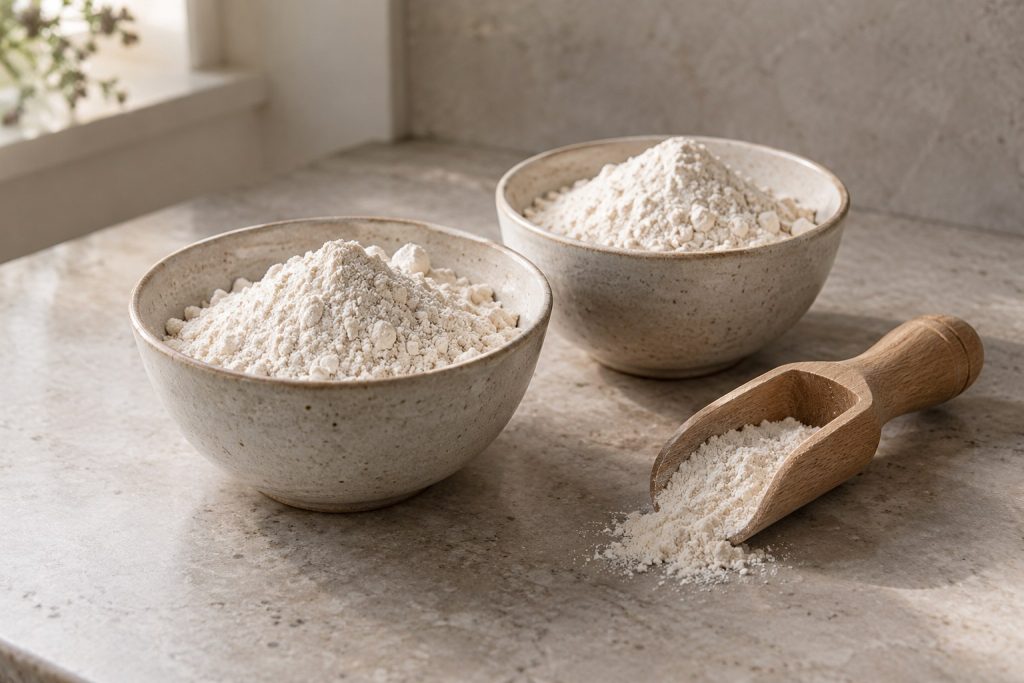
Read beyond the flour name
King Arthur describes its self-rising flour as a blend of soft wheat flour, baking powder and salt. Product formulations and naming conventions vary between markets. Do not assume every bag labeled self-raising or self-rising has an identical salt content.
Avoid accidentally doubling additions
If substituting, use a tested conversion for that flour and recipe. Keeping the original baking powder and salt unchanged may duplicate what is already in the bag. Baking soda is a separate ingredient whose role depends on the recipe’s full chemistry.
Consider the flour itself
King Arthur’s self-rising flour also differs from its all-purpose flour in protein content. The swap is therefore not only a question of adding or removing baking powder. Texture and liquid needs may change, especially in recipes designed around a specific flour.
Choose a recipe that fits
Use a recipe written for self-rising flour when possible. Do not assume it replaces bread flour and yeast in a yeast-raised loaf. Label transferred flour clearly so the next batch does not receive an unintended second dose of leavening.
Sources
King Arthur Baking; King Arthur Baking.
Related reading
Baking Soda vs Baking Powder: Why the Recipe Matters
Almond Flour vs Wheat Flour: Why a Straight Swap Can Fail
Related reading
Bread Flour vs All-Purpose Flour: What Changes in the Dough?
About this article: an introductory editorial draft. Not yet independently reviewed by a fitness professional.