Baking Soda vs Baking Powder: Why the Recipe Matters
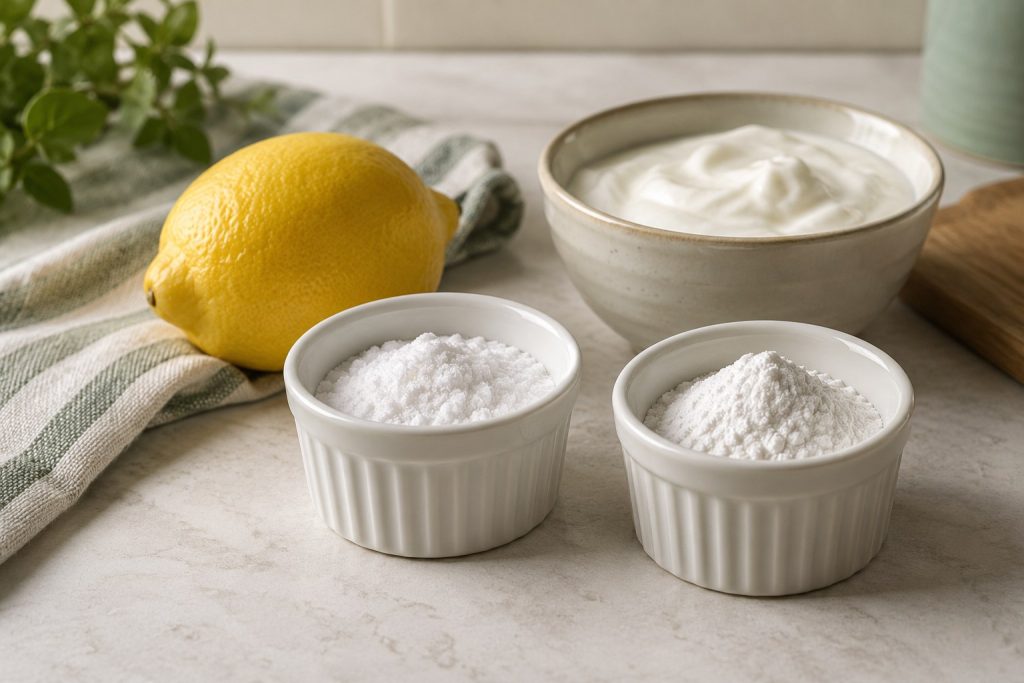
Baking soda is sodium bicarbonate and needs an acid to produce its leavening reaction. Baking powder already combines a base with an acid component. They are not equal-quantity substitutes, even though both look like white powder.
Look at the whole recipe
Ingredients such as yogurt or lemon juice can supply acid for baking soda. Baking powder provides its own acid component. King Arthur Baking explains that some recipes use both to balance the available acid and the lift needed.
Do not improvise a direct swap
Replacing the same spoonful of one with the other can change flavor, browning and rise. Find a tested substitution for that recipe or choose a recipe using the product you have. More powder is not automatically a better rescue.
Measure and mix as instructed
Use the specified measuring spoon or weight and distribute the raising agent evenly. Follow the recipe’s mixing and baking sequence; leaving a prepared batter waiting can affect the result. Do not guess the contents of an unlabeled container.
Store for the next bake
Keep the original label and close the package tightly in a dry place. Check its date and the producer’s freshness guidance. This is a cooking comparison, not a recommendation to drink baking soda or use it as a fitness supplement.
Sources
King Arthur Baking; King Arthur Baking.
Related reading
Cocoa Powder vs Hot Chocolate Mix: Why They Are Not Interchangeable
Teaspoon vs Tablespoon: Avoid a Recipe Mix-Up
Related reading
Self-Rising vs All-Purpose Flour: What Is Already in the Bag?
Related reading
Buttermilk vs Milk in Baking: Why Acidity Matters
Related reading
About this article: an introductory editorial draft. Not yet independently reviewed by a fitness professional.