Buttermilk vs Milk in Baking: Why Acidity Matters
Cultured buttermilk is not simply ordinary milk with a different name. Its acidity and texture can matter in a batter, especially when baking soda is involved. Use the recipe’s specified milk product or a substitution that the recipe developer has tested.
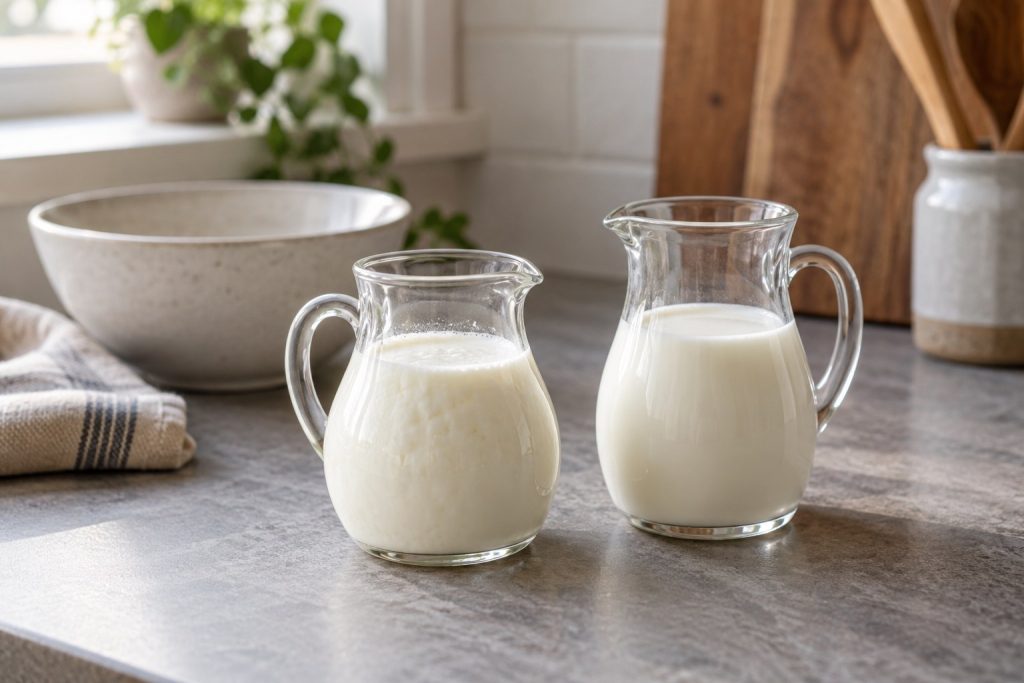
Understand the supermarket product
King Arthur Baking distinguishes traditional liquid left from churning butter from modern cultured buttermilk. The cultured product is thickened and soured through fermentation. Check which form your recipe means rather than assuming it is cream or butter mixed with milk.
Check the raising ingredients
In King Arthur’s kitchen tests, plain milk performed differently in a cake relying on baking soda. That is a reason to check the recipe, not a claim that every milk substitution fails. Changing the liquid may also require changes elsewhere in the formula.
Use a tested substitute
Acidified milk and thinned yogurt appear in substitution guidance, but they do not recreate every property of cultured buttermilk. Follow the developer’s quantities and method. Do not use milk that has spoiled as a substitute for intentionally cultured buttermilk.
Distinguish powder from liquid
Dried buttermilk is another product. King Arthur provides separate guidance for using it with liquid in recipes. Check the package and recipe instructions rather than replacing a liquid measure with the same measure of powder; store each product as directed.
Sources
King Arthur Baking; King Arthur Baking.
Related reading
Baking Soda vs Baking Powder: Why the Recipe Matters
Kefir vs Yogurt: Texture, Protein, and What the Label Tells You
Related reading
Salted vs Unsalted Butter in Baking: What Should You Adjust?
About this article: an introductory editorial draft. Not yet independently reviewed by a fitness professional.