Salted vs Unsalted Butter in Baking: What Should You Adjust?
Use the butter specified by a baking recipe. Unsalted butter lets the writer control salt separately; salted butter already contributes some. Substitution can work, but do not automatically add the full listed salt amount without checking the author’s guidance.
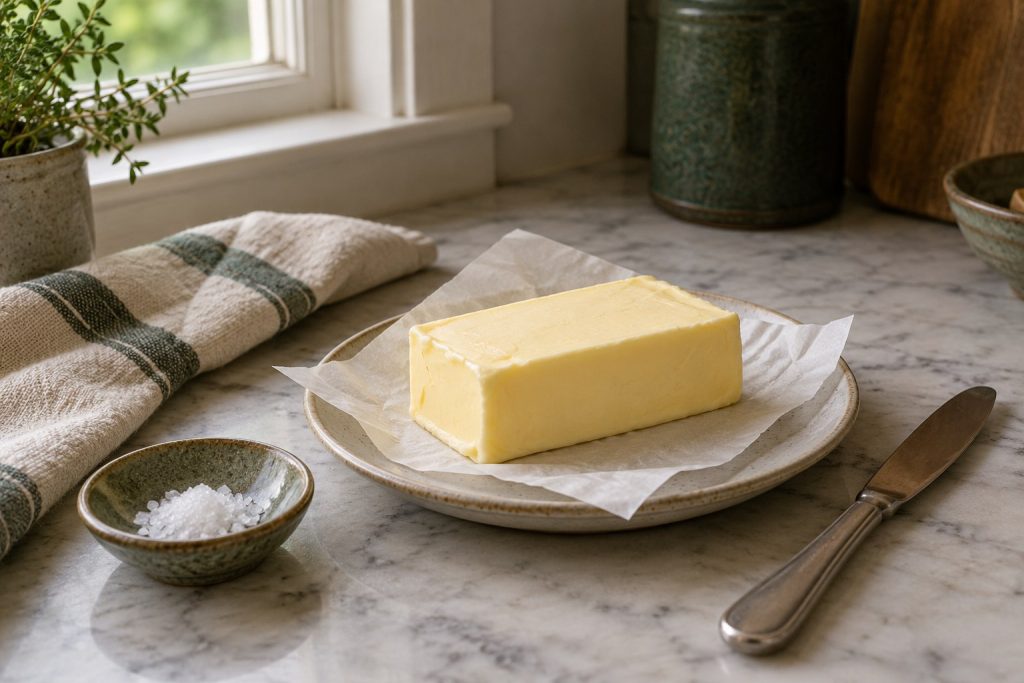
Read the complete ingredient line
Salted or unsalted is only one distinction. Check whether the butter should be cold, softened or melted, and whether a particular style is required. Changing the salt choice does not change those preparation instructions.
Use a recipe-specific adjustment
King Arthur provides a salt-reduction guideline when salted butter replaces unsalted in its recipes. Follow the recipe writer’s advice where available rather than treating one adjustment as exact for every brand. Record the change if you plan to repeat the bake.
Do not confuse butter styles
King Arthur distinguishes the salt choice from American-style versus European-style butter, which can differ in fat and water content. Salted does not mean European-style, and unsalted does not establish a particular fat percentage. Check the product specification.
Keep the comparison about function
A tub spread or a butter-and-oil blend is another substitution, even if its label says unsalted. Read the ingredients and use a recipe tested for that product when needed. Neither salt option alone makes a finished bake a health food; the overall recipe and portion still matter.
Sources
Related reading
Buttermilk vs Milk in Baking: Why Acidity Matters
Kosher Salt vs Table Salt: Why the Spoonful Changes
Related reading
About this article: an introductory editorial draft. Not yet independently reviewed by a fitness professional.