Reflective Gear vs Lights for Evening Walks
Reflective material helps return incoming light toward its source. A light produces its own illumination. For an evening walk, think separately about being noticed and being able to see the path.
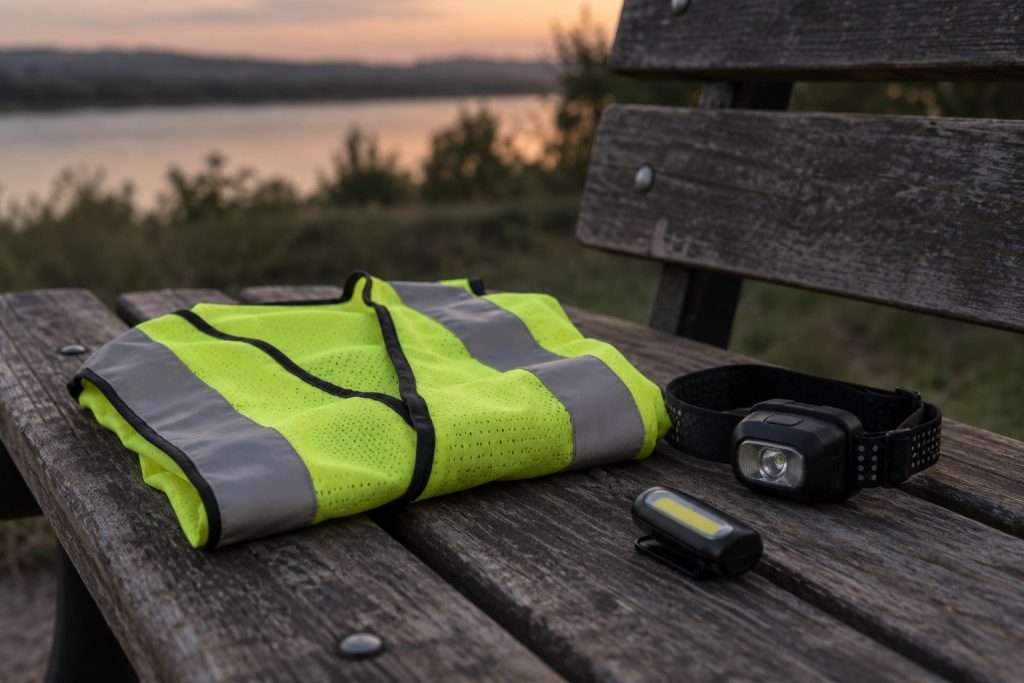
What reflective material can do
Retroreflective strips can appear bright in vehicle headlights, but they need incoming light. A fluorescent yellow vest may stand out in daylight without providing the same nighttime effect unless it also has reflective material. Check the product description rather than judging only its color.
What a light adds
A headlamp or flashlight can help reveal the ground ahead. A small clip light may mainly signal your presence and may not light uneven pavement adequately. Check battery charge, mounting security and whether a bag or coat covers the light.
Combine equipment with route choices
Keep reflective areas visible from different directions and aim a headlamp so it does not dazzle others. Prefer sidewalks and established crossings. Equipment cannot ensure a driver has noticed you; pause and check traffic before crossing.
Check the actual conditions
Street lighting, rain, bends and parked vehicles change what people can see. Reassess your route if visibility or footing is poor. NHTSA’s guidance supports conspicuity measures, but being more detectable is not a guarantee against a collision.
Sources
Related reading
Cold-Weather Workouts: Layers, Footing, and a Return Plan
Build a Walking Habit That Fits Your Day
Related reading
About this article: an introductory editorial draft. Not yet independently reviewed by a fitness professional.