Headlamp Flood vs Spot Beam: Look Beyond Lumens
A flood beam spreads light over a broad nearby area, while a spot beam concentrates it farther ahead. Many headlamps combine both. For walking, choose a beam that lets you see the ground and the route, rather than relying only on the biggest lumen number.
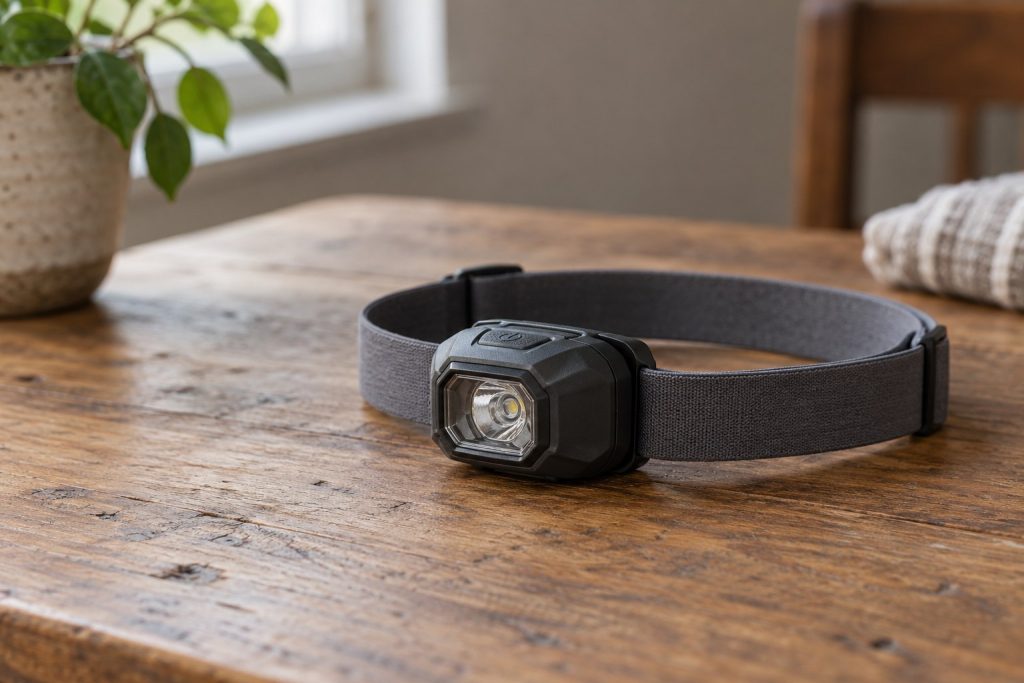
Match the beam to the task
Petzl distinguishes wide beams for close work from focused beams for distance. Reading a map and looking along a trail are different tasks. A mixed beam can provide nearby ground lighting while also adding reach.
Compare the actual modes
Check whether flood and spot can operate together or only separately. Read the stated output and runtime for the mode you expect to use. Maximum brightness and longest runtime often describe different settings, so do not treat them as a single performance promise.
Try the controls before leaving
Fit the strap and learn the switches while indoors. Check how to dim the lamp, angle it downward and lock it for transport if that function exists. Aim the light away from other people’s eyes when checking settings.
Plan for a fading battery
Follow the model’s charging or battery instructions and bring an appropriate backup when darkness would make your route difficult. A headlamp does not replace route planning or equipment intended to make you visible to road users. Check conditions before setting out.
Sources
Related reading
Reflective Gear vs Lights for Evening Walks
How to Check Daypack Fit Before a Long Walk
Related reading
What Is the Red Light on a Headlamp For?
Related reading
Headlamp Brightness and Runtime: Read the Same Mode
Related reading
Bike Light Lumens vs Lux: Why the Numbers Are Not Interchangeable
About this article: an introductory editorial draft. Not yet independently reviewed by a fitness professional.