Red vs White Wine Vinegar: Which Fits Your Salad Dressing?
Red and white wine vinegar can both be used in salad dressings. The choice changes color and flavor, not simply how much acidity a recipe needs. Use the specified bottle for the most predictable version of a recipe.
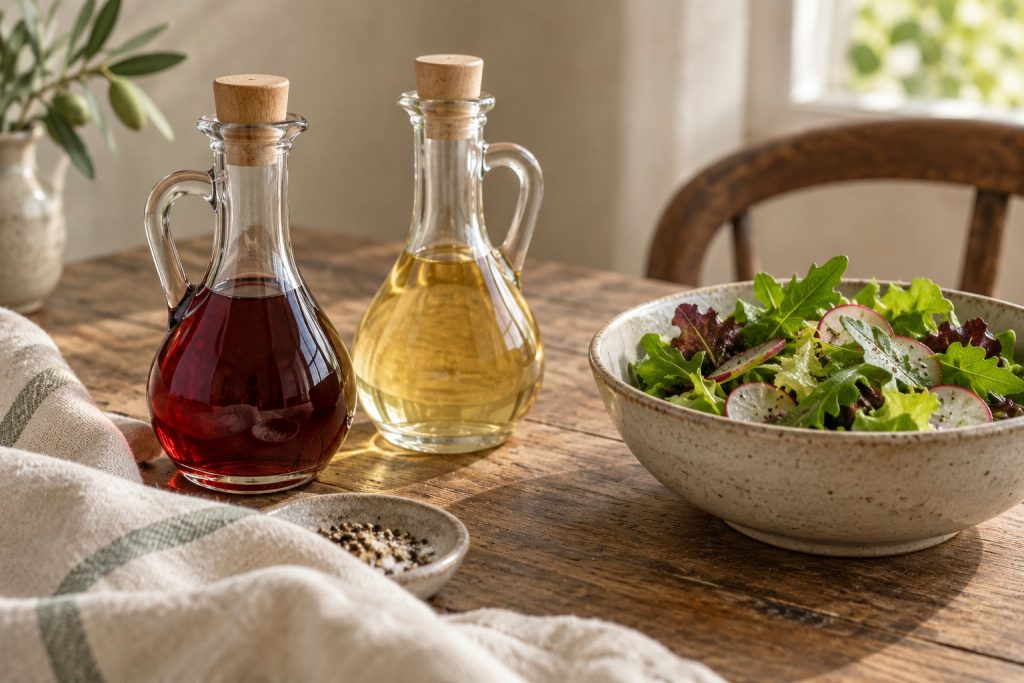
Think about the finished color
Red wine vinegar can tint a pale dressing, while white wine vinegar keeps the color lighter. That may matter in a creamy or herb dressing. Choose for the appearance you want without treating darker color as proof of better nutrition.
Use the producer’s suggested applications
Pompeian suggests its red wine vinegar for dressings, marinades and sauces, and its white wine vinegar for herb dressings and other uses. Their roles overlap. These examples do not establish that every brand has identical flavor or strength.
Test a substitution in the dressing
If changing vinegars for an ordinary salad, mix and taste a small finished portion before dressing everything. Keep a note of the amount used. Avoid comparing them by tasting a large spoonful of undiluted vinegar.
Read more than the color name
Check the ingredient list and any stated acidity, particularly for flavored versions. White wine vinegar is not the same label as distilled white vinegar. This comparison is for cooking and dressing choices, not a substitution rule for home-preservation recipes.
Sources
Related reading
Seasoned Rice Vinegar: What Has Already Been Added?
Dijon vs Yellow Mustard: Taste Before You Swap
Related reading
Apple Cider Vinegar with the Mother: What Changes for Cooking?
About this article: an introductory editorial draft. Not yet independently reviewed by a fitness professional.