Seasoned Rice Vinegar: What Has Already Been Added?
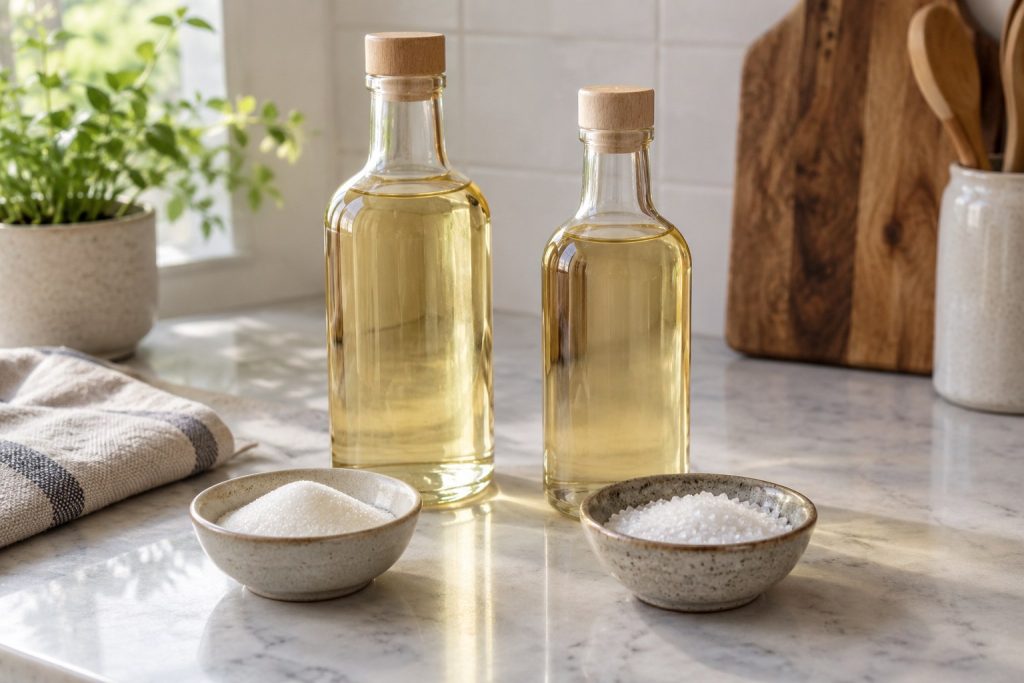
Seasoned rice vinegar is not simply plain rice vinegar with a different name. It can already contain sugar and salt, which changes how it works in a recipe. Check whether the recipe expects seasoned or unseasoned vinegar before mixing everything together.
Read the ingredient list
Marukan lists rice vinegar, sugar, salt and water in its Seasoned Gourmet product. Its customer guide distinguishes this from Genuine Brewed rice vinegar. These are specific product examples; another brand’s seasoning may differ.
Avoid adding the same seasoning twice
If a dressing recipe specifies plain vinegar plus sugar and salt, a seasoned bottle changes the starting mixture. Use the specified product or a tested variation. Tasting a separate small portion can help with everyday dressing adjustments, but it does not establish a universal substitution ratio.
Compare equivalent portions
Check sugar and sodium on the actual label using the same quantity of each product. Do not assume that a clear-looking vinegar is unseasoned. A label such as lite also needs its stated comparison rather than an assumption that it contains no sugar or salt.
Keep preservation recipes separate
Flavor adjustments for a meal are not a method for validating home canning. Follow a research-tested preservation recipe’s exact vinegar type, acidity and quantities. A seasoned dressing vinegar should not be substituted merely because it tastes sour.
Sources
Marukan; Marukan; National Center for Home Food Preservation.
Related reading
Light vs Dark Soy Sauce: Light Does Not Mean Low Sodium
Bottled vs Fresh Lemon Juice: Cooking Is Not Canning
Related reading
Vinegar Pickles vs Fermented Pickles: Where the Acidity Comes From
Related reading
Balsamic Vinegar vs Glaze: Dressing Ingredient or Finishing Drizzle?
About this article: an introductory editorial draft. Not yet independently reviewed by a fitness professional.