Vinegar Pickles vs Fermented Pickles: Where the Acidity Comes From
Vinegar pickles get their acidity from added acid, while fermented pickles develop acidity during fermentation. Both can taste sour, so taste alone does not identify the process or establish safe storage. Check the product description and storage instructions.
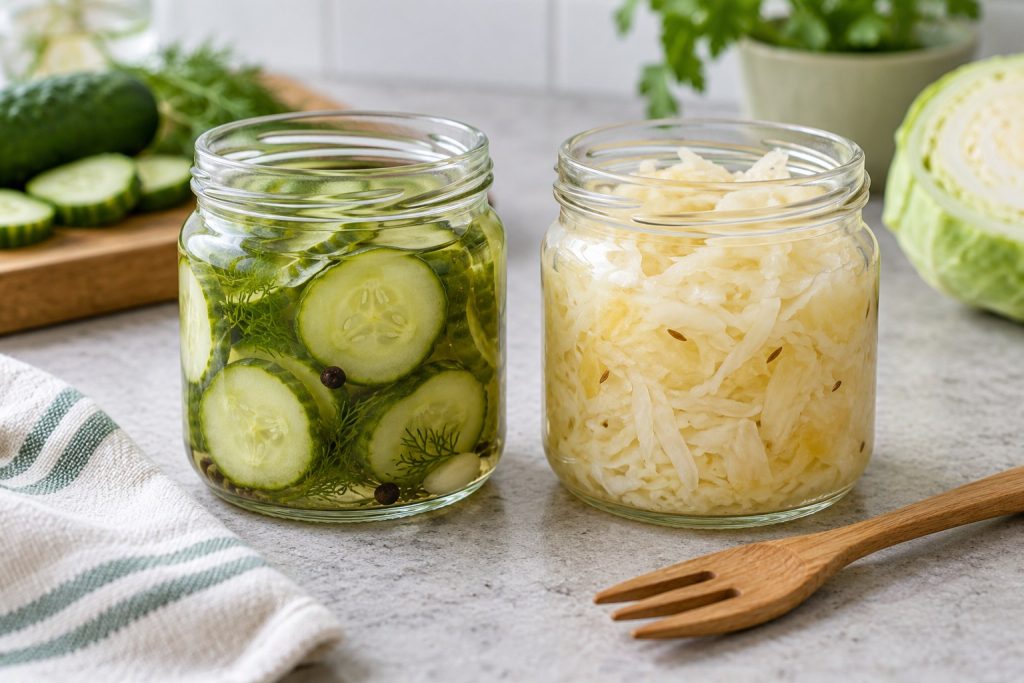
Separate the processes
The National Center for Home Food Preservation distinguishes fresh-pack or quick-process pickles from fermented products. Quick-process pickles are not fermented, even if they first spend time in a salt brine. In fermented products, the curing process changes acidity, flavor and texture.
Read beyond the jar’s appearance
A photograph of pickles cannot show which process was used. Look for a clear manufacturer description rather than inferring fermentation from cloudy liquid, a rustic label or a refrigerated display. These clues alone do not establish what is inside or how it should be stored.
Follow a tested recipe at home
For home preparation, use a tested recipe for the exact method. NCHFP warns against changing the vinegar, food and water proportions or using vinegar of unknown acidity. Do not reduce the required salt in fermented pickles; it has a safety role as well as a flavor role.
Keep storage instructions attached
A refrigerator-pickle recipe is not automatically a shelf-stable canning recipe. Follow the stated processing and storage method, and label homemade containers accordingly. A tight lid or sour flavor is not proof that a jar can safely sit in the cupboard.
Sources
National Center for Home Food Preservation; National Center for Home Food Preservation.
Related reading
About this article: an introductory editorial draft. Not yet independently reviewed by a fitness professional.