Apple Cider Vinegar with the Mother: What Changes for Cooking?
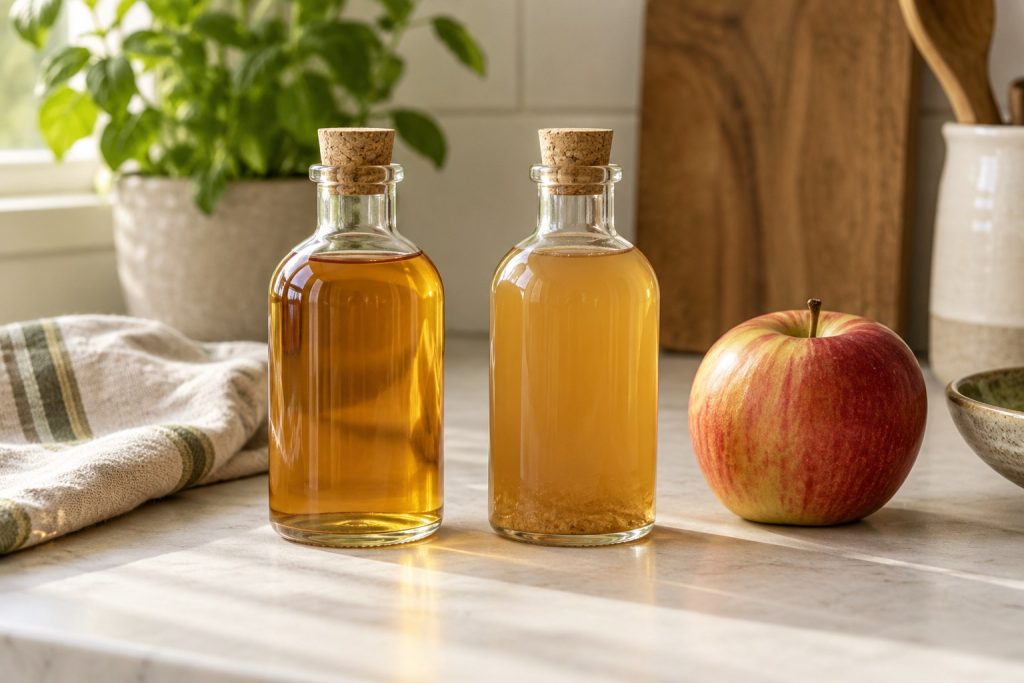
Apple cider vinegar with the mother retains material associated with fermentation, giving it a cloudy or strand-filled appearance. Filtered cider vinegar is clearer. For cooking, compare flavor, ingredients, and stated acidity rather than treating cloudiness as a quality score.
What the mother refers to
Bragg describes its mother as a mixture of bacteria and carbohydrates formed during fermentation. This explains the visible material; it does not, by itself, establish a particular health benefit. Clear filtered vinegar is still vinegar and can be a useful kitchen ingredient.
Read acidity separately
Heinz’s filtered cider vinegar is labeled 5% acidity, and Bragg describes its cider vinegar at 5% too. These are product examples. The presence or absence of visible mother is not a measurement of acid strength, and other products may differ.
Choose for an everyday dressing
For a salad dressing or marinade, follow the recipe and adjust flavor as appropriate to that dish. Check for added ingredients or flavored versions. There is no need to buy a cloudy product merely because a recipe asks for apple cider vinegar.
Preserving needs its own instructions
For canning or shelf-stable pickling, use a tested preservation recipe and the vinegar acidity it specifies. Do not substitute homemade or unknown-strength vinegar based on its appearance. A casual dressing substitution is not a rule for preserved foods.
Sources
Bragg — Ingredients and fermentation; Heinz — Cider vinegar; Bragg — Cider vinegar production; NCHFP — Fermentation and pickling guidance.
Related reading
Red vs White Wine Vinegar: Which Fits Your Salad Dressing?
Vinegar Pickles vs Fermented Pickles: Where the Acidity Comes From
About this article: an introductory editorial draft. Not yet independently reviewed by a fitness professional.