How to Choose a Ripe Mango Without Relying on Red Skin
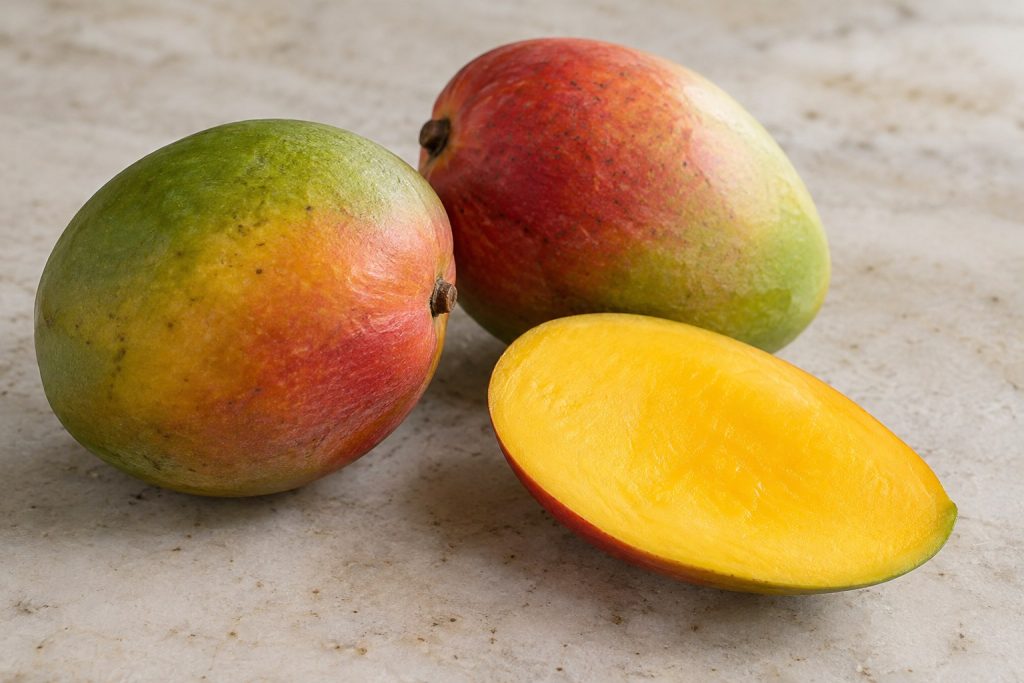
A ripe mango generally gives slightly when gently squeezed. Red skin is not a dependable ripeness signal. The National Mango Board recommends judging by feel because varieties differ in color, shape and size.
Use gentle pressure
Hold the mango and give it a gentle squeeze. A very firm fruit is less ripe; a ripe one has a little give. Avoid pressing hard enough to bruise it, and do not confuse a small soft damaged patch with even ripening.
Treat aroma as an extra clue
Ripe mangoes sometimes smell fruity near the stem. The word sometimes matters: do not reject an otherwise suitable fruit only because the aroma is faint. Combine clues rather than searching for a single perfect color or smell.
Choose the stage for the dish
Mango flavor moves from tart toward sweet with ripening. A recipe built around firm, tart mango is not asking for the same texture as a sweet fruit snack. Read the recipe before selecting the softest available fruit.
Keep appearance in perspective
A red blush is a variety characteristic, not proof of sweetness. Compare the fruit you actually have and check its condition before cutting. For recipes, use the requested prepared amount rather than assuming every mango has the same edible yield.
Sources
Related reading
About this article: an introductory editorial draft. Not yet independently reviewed by a fitness professional.