Green vs Gold Kiwi: Different Types, Not Ripeness Stages
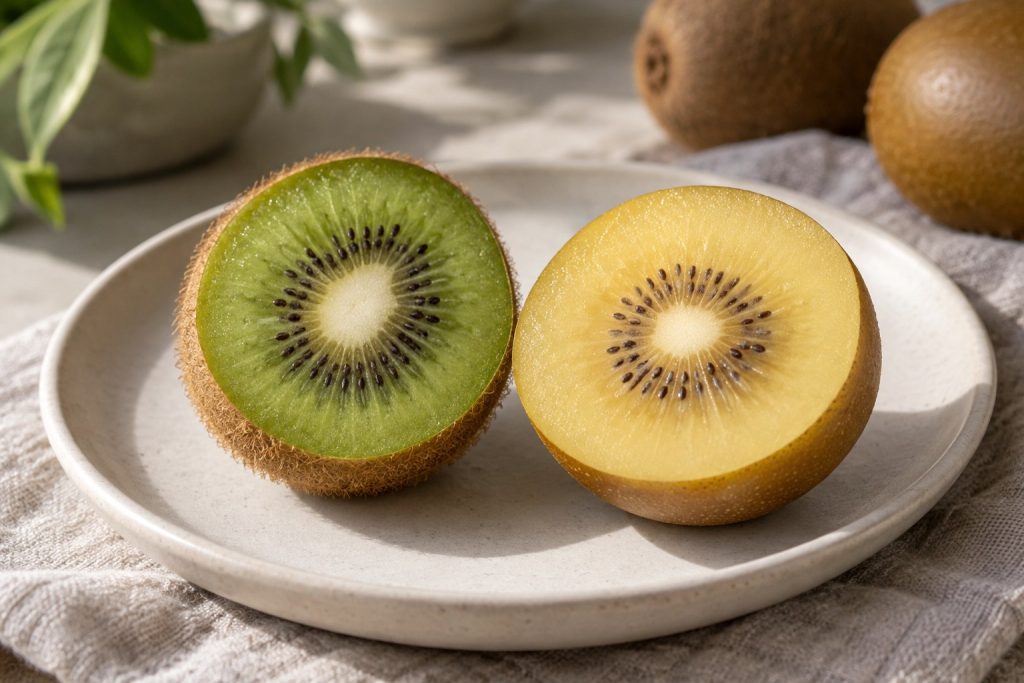
Gold kiwi is not simply a green kiwi that has ripened longer. Green and gold describe different types of kiwifruit. Choose by the product, ripeness and flavor you prefer rather than expecting green flesh to turn gold.
Use the producer’s comparison precisely
Zespri describes its Green fruit as fuzzy-skinned with green flesh, and SunGold as smoother-skinned with golden flesh. Those are descriptions of its products, not a promise that every green or golden variety has identical skin or flavor.
Expect a flavor difference
The producer describes Green as tangy-sweet and SunGold as sweeter with a tropical character. Individual fruit and ripeness still affect the experience. Try a small amount before deciding which suits a fruit salad or breakfast bowl.
Check ripeness separately
For ready-to-eat kiwi, gentle give under light pressure is a useful cue; do not squeeze hard enough to bruise it. A firm green kiwi does not need to become yellow inside before eating. The color category and ripeness are separate questions.
Prepare according to preference
You can scoop out the flesh, peel the fruit, or eat washed edible skin if you like its texture. Compare the prepared amount for a recipe rather than fruit count. A higher price or golden color alone does not establish that one option is healthier.
Sources
Related reading
Whole Fruit vs Fruit Juice: What Changes?
How to Wash Fruit and Vegetables Without Soap
Related reading
About this article: an introductory editorial draft. Not yet independently reviewed by a fitness professional.