Peaches vs Nectarines: More Than a Skin Preference
Peaches usually have fuzzy skin, while nectarines have smooth skin. They are closely related forms of the same species, and both can have white or yellow flesh. Skin texture does not tell you every detail inside.
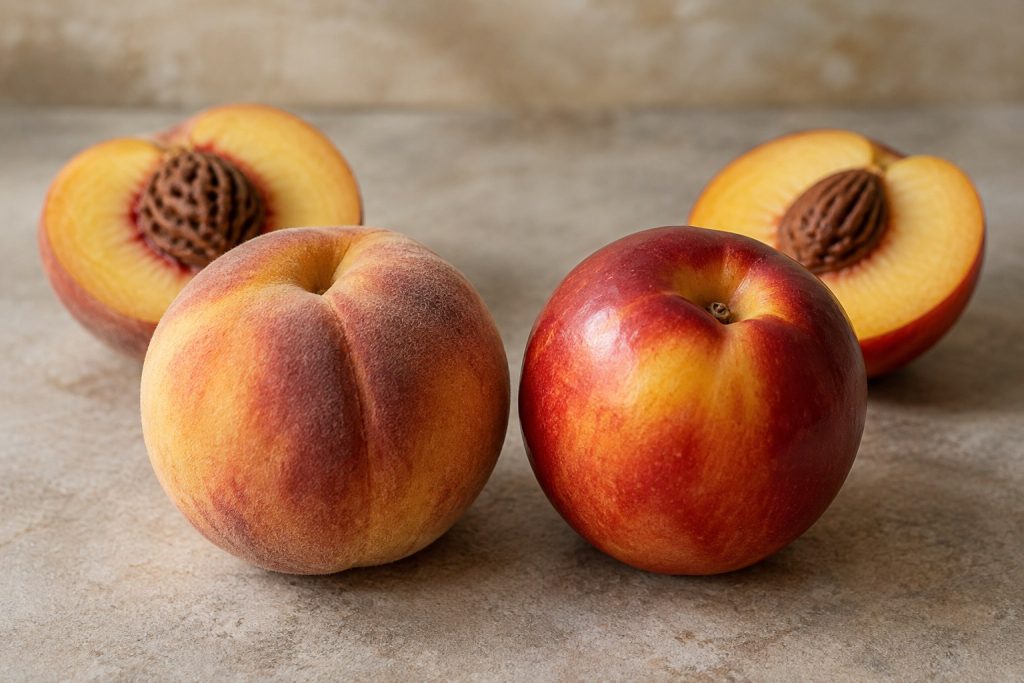
Separate flesh color from skin texture
A nectarine is not simply the yellow-fleshed option and a peach the white-fleshed option. Check the variety or cut fruit if flesh color matters to the dish. Red blush on the outside does not resolve that question.
Stone attachment is another characteristic
Freestone fruit separates more readily from the stone than clingstone fruit. Those terms describe attachment, not whether the skin is fuzzy. For neatly cut slices, ask about the variety instead of assuming all nectarines release their stones easily.
Choose by condition and intended use
Do not assume every nectarine is sweeter than every peach. Variety and ripeness matter to the experience. Examine the actual fruit and decide whether you need pieces that hold their shape or softer fruit for a blended dish.
Compare prepared fruit when swapping
For a fresh fruit salad, either can work with a changed skin texture. Use the prepared amount the recipe requests rather than matching fruit counts. Fresh-dish flexibility should not be treated as permission to alter a tested preserving recipe.
Sources
University of Maryland Extension; Melissa’s Produce; Iowa State University Extension.
Related reading
How to Wash Fruit and Vegetables Without Soap
Fresh vs Frozen Berries: Buying, Texture, and Storage
Related reading
Fuyu vs Hachiya Persimmons: Firm Slices or Soft Pulp?
Related reading
About this article: an introductory editorial draft. Not yet independently reviewed by a fitness professional.