Fine-Mesh Sieve vs Colander: Choose by the Holes
A fine-mesh sieve catches smaller particles than a typical large-hole colander. A colander is often convenient for draining larger foods. Choose by the actual openings, capacity and support rather than the name alone.
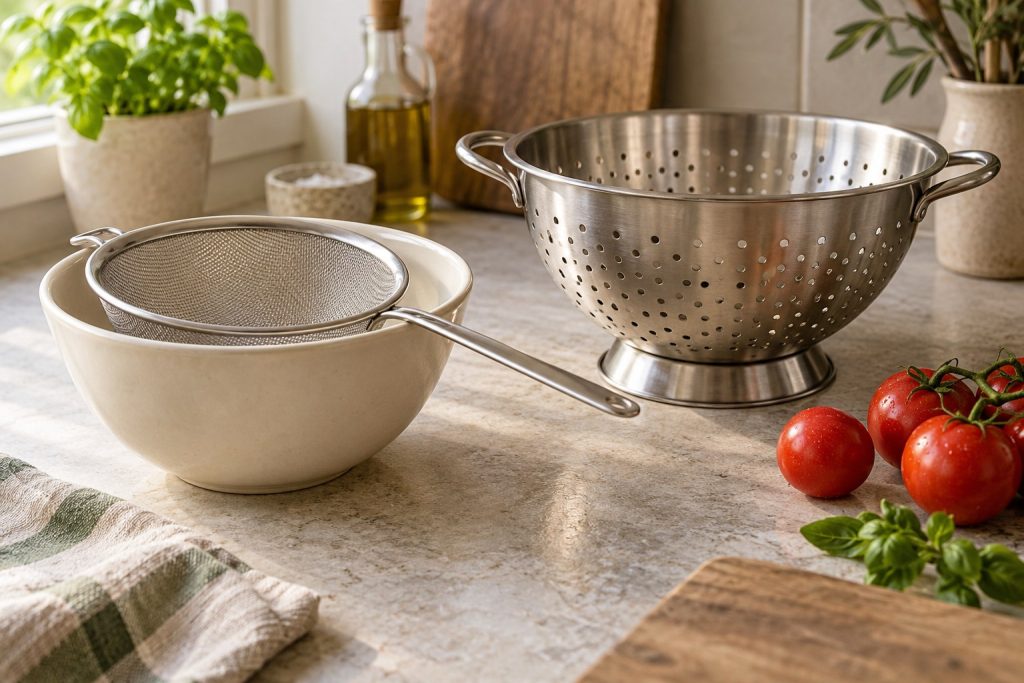
Match the openings to the food
Check whether grains, seeds or small pieces can slip through. A fine sieve may suit a small batch of rinsed quinoa, while larger pasta is easier to drain in a roomy colander. Specialized rice-washing colanders are an exception to simple naming rules.
Look at how it is supported
Many sieves have a handle and a small resting loop for a bowl or pot; many colanders stand on a base. Confirm that the tool sits securely before loading it. Do not balance a heavy batch on an unstable rim.
Decide which part you want to keep
For draining pasta, the food stays in the tool. For straining a liquid you intend to save, place a suitable receiving vessel underneath first. This simple check prevents useful cooking liquid from disappearing down the sink.
Check materials and cleaning instructions
Use a tool rated for the temperature and task, especially when draining hot food. Mesh can retain small food particles, so inspect it after washing. Follow the manufacturer’s care instructions rather than assuming every plastic or metal strainer is dishwasher safe.
Sources
Related reading
Do You Need to Rinse Quinoa Before Cooking?
Should You Rinse Canned Beans? Check the Recipe First
Related reading
About this article: an introductory editorial draft. Not yet independently reviewed by a fitness professional.