When Does Sifting Flour Actually Matter?
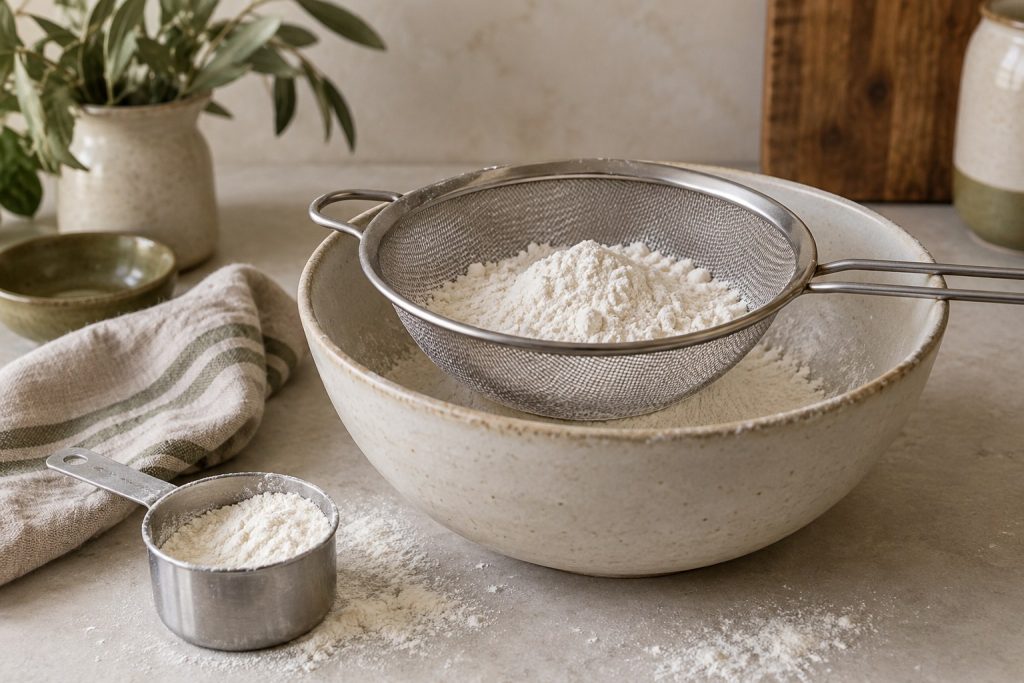
Sifting flour removes lumps and introduces air. Many modern recipes do not require it, but it can help when flour must fold gently into a delicate mixture. Follow the recipe’s purpose instead of treating sifting as either always essential or always pointless.
Look for a delicate mixture
King Arthur Baking highlights sponge-style cakes and mixtures containing whipped egg whites. Breaking up flour clumps makes incorporation easier without prolonged mixing. If a recipe deliberately includes sifting before folding, keep that step even when the flour looks fine.
Use a suitable tool
A flour sifter or fine-mesh sieve can do the job. Work over a bowl large enough to catch the ingredient. A pasta colander with large holes is not equivalent, and tapping flour through a sieve is different from packing it through forcefully.
Keep measuring and sifting distinct
Aeration changes how flour fills a measuring cup. Use the recipe’s stated weight when available and follow its order of operations. Do not add extra flour merely because a measured amount looks larger after passing through the sieve.
Know the limits of whisking
King Arthur suggests whisking as a way to loosen and aerate flour without a sieve, while noting it may not give equally fine results. That is a practical option when appropriate, not a reason to ignore a recipe needing thorough lump removal.
Sources
King Arthur Baking — Sifting Flour.
Related reading
About this article: an introductory editorial draft. Not yet independently reviewed by a fitness professional.