Should You Rinse Canned Beans? Check the Recipe First
Drain and rinse plain canned beans when you want less packing liquid and potentially less sodium in the dish. Rinsing is useful, but it does not make every bean product sodium free. For beans sold in a prepared sauce, check whether the recipe expects you to keep that sauce.
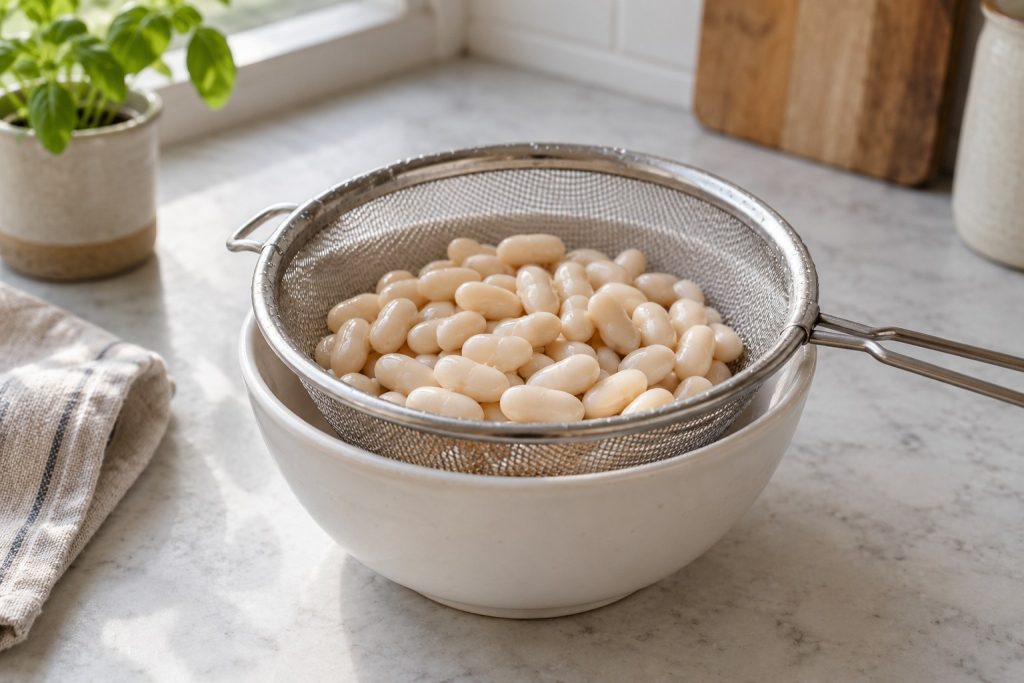
Separate plain beans from a finished dish
Plain beans in liquid are different from baked beans or chili beans in seasoned sauce. Pouring away a prepared sauce changes the flavor and the quantity of the dish. Read the ingredient list and recipe before reaching for the strainer.
Rinse with clean water
For plain canned beans, drain them into a clean strainer, rinse under cool running water and let them drain again. Penn State Extension recommends draining and rinsing to reduce sodium. Do not use soap or assume that rinsing replaces appropriate storage.
Avoid a fixed sodium calculation
The amount removed depends on the product and method. You cannot reliably calculate the final sodium in your bowl by subtracting the same percentage from every label. A no-salt-added or lower-sodium product can be a more predictable starting choice when sodium matters.
Keep useful recipe context
Some recipes deliberately use the liquid for body or flavor. If you discard it, follow the recipe’s instructions for replacement liquid and adjust seasoning at the end. Refrigerate unused opened beans promptly according to the product guidance; an opened can is no longer a sealed pantry item.
Sources
Penn State Extension; Penn State Extension.
Related reading
Canned vs. Dried Beans: Compare Convenience, Sodium, and Cost
Drained Weight vs Net Weight: How Much Food Is in the Can?
Related reading
About this article: an introductory editorial draft. Not yet independently reviewed by a fitness professional.