Elliptical vs. Treadmill: How to Choose Your Cardio Workout
An elliptical keeps your feet on moving pedals, while a treadmill lets you walk or run on a belt. Choose the treadmill when practicing walking or running is the main goal; consider an elliptical when you prefer a supported stepping motion. Either can provide an easy or demanding cardio session.
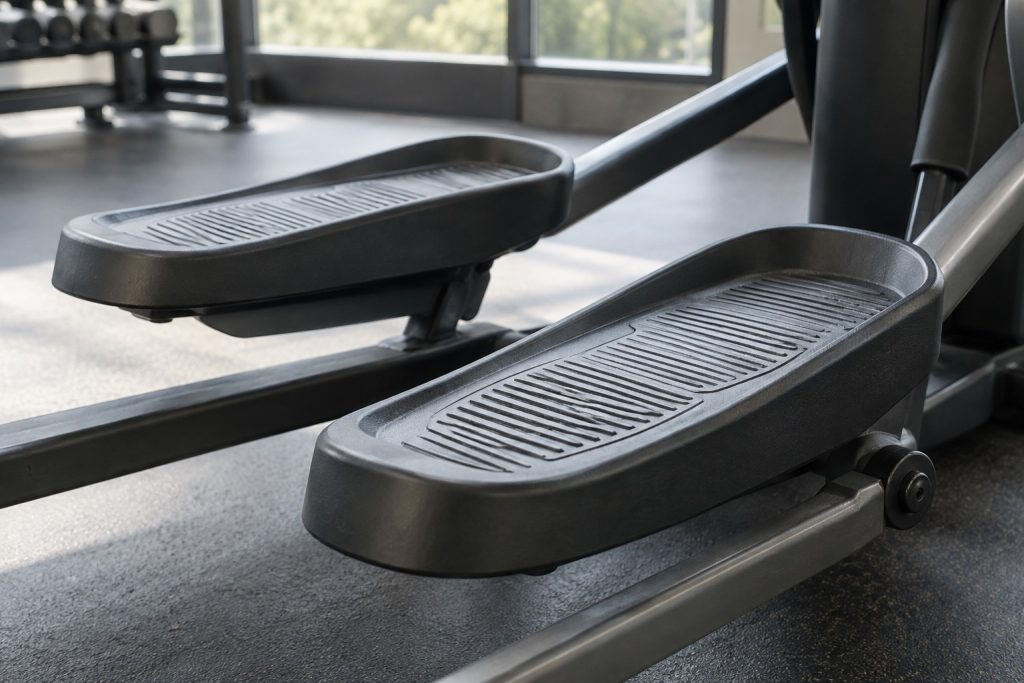
What is the main movement difference?
On an elliptical, the machine guides the path of each foot. Some models also have moving handles. On a treadmill, you take repeated steps on a moving surface and adjust speed and, on many models, incline. Running adds a different impact demand from walking.
Mayo Clinic includes elliptical exercise among lower-impact options that can be easier on joints. That does not mean every elliptical is comfortable for every person, or that treadmill walking is automatically unsuitable. Symptoms and the fit of the movement matter.
Which machine suits your goal?
| Your priority | What to consider |
|---|---|
| Practice a walking or running pace | A treadmill lets you train that specific activity. |
| Avoid repeated running landings | An elliptical may offer a comfortable alternative. |
| Keep an exercise habit through bad weather | Either can work if you enjoy and can access it. |
| Compare progress | Repeat the same machine setup and record effort. |
If your goal is an outdoor race, an elliptical can be part of the broader routine, but its displayed distance is not a direct substitute for running miles. Read treadmill versus outdoor running for another useful comparison.
Which one burns more calories?
There is no useful winner without specifying the person, duration, and effort. Comparing a hard run with gentle elliptical movement mainly compares two different sessions. The machine display is an estimate, not a measured verdict on the value of your workout.
Avoid selecting the machine solely because its screen reports a higher number. Our guide to calorie estimates from fitness devices explains why those numbers deserve context.
How can you compare them fairly?
Try short, comfortable sessions on separate days. Record how easy the controls are to use, whether the movement feels natural, and whether you would willingly repeat it. Match perceived effort rather than copying speed or resistance numbers between machines.
On a treadmill, learn the safety-stop control before starting. On an elliptical, get on and off only when the pedals have stopped and use the supports as instructed. Ask gym staff for help with unfamiliar equipment.
Do you have to choose only one?
No. You can alternate activities for preference or availability. Keep separate records for each so the comparisons remain meaningful. Learn more about low-impact exercise before equating lower impact with lower effort.
Try another cardio option
See our guide to stair-climber basics for beginners for practical examples and the limits of the general guidance.
Related reading
About this article: an introductory editorial draft. Not yet independently reviewed by a fitness professional.