Bulgur vs Raw Cracked Wheat: Check What Has Already Been Cooked
Bulgur is wheat that has been cooked or partially cooked, dried and broken into pieces. Raw cracked wheat has been broken without that precooking step. Similar-looking grains can therefore need different preparation even when both come from wheat.
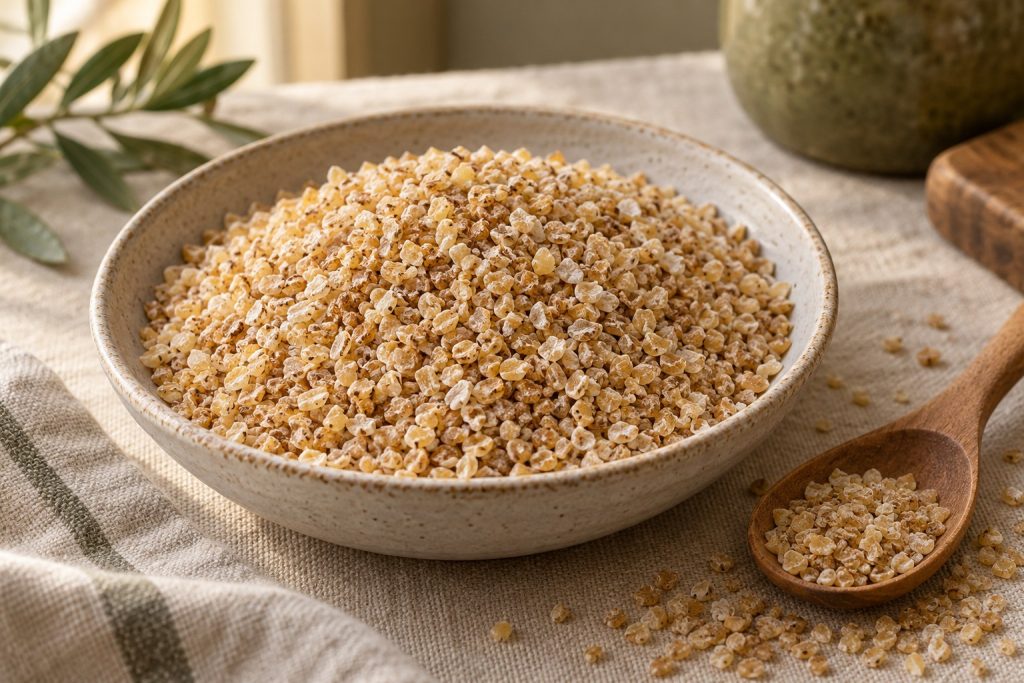
Look beyond the words cracked wheat
Bob’s Red Mill distinguishes raw cracked wheat from precooked bulgur, while also describing bulgur as a form of cracked wheat. That makes the full product name and instructions important. Check whether bulgur or a precooking step is specified.
Match the grind to the recipe
Fine and coarse bulgur do not necessarily use the same preparation. A salad written for fine bulgur should not automatically receive a coarse grain prepared the same way. Read the packet and the recipe together before choosing soaking or simmering.
Do not assume raw grains follow bulgur timing
A quick bulgur method is not proof that raw cracked wheat will soften in that time. Use cooking instructions for the ingredient you bought. If replacing it in a dish, choose guidance that accounts for the different preparation rather than changing only the name.
Keep the dietary identity clear
Both conventional products are wheat foods; breaking or precooking the kernels does not make them gluten-free. Check the specific label for your dietary needs. For nutrition comparisons, match dry with dry or cooked with cooked and use an equivalent portion.
Sources
Bob’s Red Mill — Bulgur Preparation; Bob’s Red Mill — Bulgur.
Related reading
Bulgur vs Couscous: Grain, Texture, and Cooking
Should You Weigh Food Raw or Cooked? Match the Food to the Entry
About this article: an introductory editorial draft. Not yet independently reviewed by a fitness professional.